REVIEW · VARNA
Self-guided tour in Varna Archaeological Museum + ticket
Book on Viator →Operated by VisitBulgariaOn Bespoke Experiences · Bookable on Viator
If you want a break from the beach, this museum is your reset button. You’ll use a pre-booked ticket to get into Varna Archaeological Museum and then work your way through centuries of finds at your own pace, with English support on site. It’s a small, practical outing—about 2 to 3 hours—that fits nicely between sea time and dinner plans.
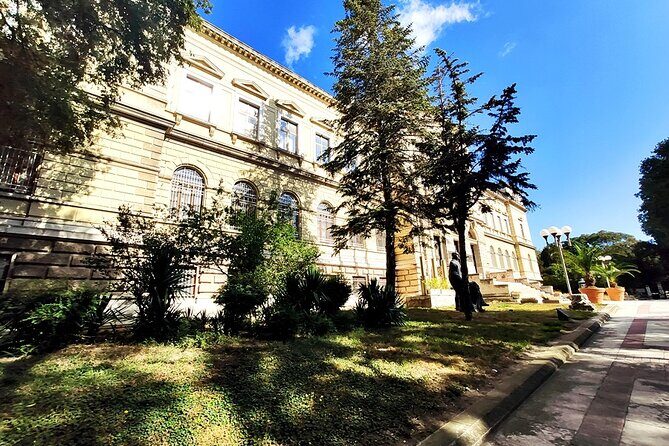
I especially like the museum’s setting and building story. The museum sits in a new renaissance structure originally built as a Girls High School (1892–1898) by Bulgarian architect Petko Momchilov, with a continuous corridor that links the exhibition rooms and even wall paintings in some corridors and spaces.
My one caution is about expectations around the ticket itself. This isn’t handed over as a normal paper ticket; you’ll receive a voucher step that gets you access, and if the museum is closed on a public holiday for your specific date, entry may be impacted.
In This Review
- Key Points at a Glance
- A Beach-Break That Actually Feels Like Travel in Varna
- The Varna Archaeological Museum Building: More Interesting Than You’d Expect
- Planning Your 2–3 Hours: How to Get Value Without Rushing
- What You’ll See: Tombstones, Surgical Tools, and Jewelry Across Eras
- The Museum’s Origins Matter: The People Behind the Collections
- Entry Reality Check: Voucher Step and Pre-Booked Access
- Price and Value: Is $22.48 Reasonable?
- Who This Self-Guided Museum Stop Fits Best
- Should You Book This Varna Archaeological Museum Ticket?
- FAQ
- What is included in the Varna Archaeological Museum self-guided experience?
- How long should I plan to spend at the museum?
- What days and hours is the museum open?
- Is the experience available in English?
- Is this a guided tour with a live guide?
- Do children need to be accompanied by an adult?
- How will I receive the access to the museum?
- What is the maximum group size?
- Is there free cancellation?
Key Points at a Glance

- Pre-booked access helps you avoid the letdown of showing up and not getting in.
- English materials make the exhibits easier to follow without needing a full guided tour.
- A fascinating building: former girls’ school with a layout designed around a continuous corridor.
- Family-friendly break from the busy beach crowds, with museum time that usually works for kids too.
- Standout artifacts like tombstones, surgical tools, and jewelry connect you to real everyday lives.
- A clear time-jump across Hellenistic, Roman, and medieval periods.
A Beach-Break That Actually Feels Like Travel in Varna
Varna is at its best when you mix big-city strolls with the sea—yet sometimes you need an hour or two that doesn’t involve sand, crowds, or chasing shade. This self-guided museum visit is a smart pivot. You trade coastline views for something older, quieter, and genuinely Varna-region specific.
The museum experience also has the right kind of structure for independent travelers. You’re not wandering blind: the museum’s exhibition areas are connected by a continuous corridor, so you can keep moving in order and not lose your bearings. If you’re the type who hates wasting time trying to “figure it out,” you’ll appreciate how the space is designed.
And because it’s offered in English, you can actually read what you’re seeing. That matters here, because the collection spans multiple historical periods, and the labels help you place artifacts in context instead of just collecting trivia.
A few more Varna tours and experiences worth a look
The Varna Archaeological Museum Building: More Interesting Than You’d Expect

The museum doesn’t just hold history—it also is history. The building was constructed as a Girls High School from 1892 to 1898, designed by Petko Momchilov, and it’s in a new renaissance style. The layout almost forms a complete square and includes a spacious inner yard, which gives the site a more “planned” feel than a typical small museum.
Inside, the flow helps you stay engaged. A continuous corridor runs throughout the building, guiding you from one exhibition room to the next. That means you can do this in a way that fits your mood:
- If you want to go quickly, you can keep moving along the corridor and focus on the main sections.
- If you want slower reading, you can pause at rooms without feeling like you’re constantly backtracking.
Some rooms and corridors have wall paintings too, which adds atmosphere. Even if your main goal is the artifacts, the building makes the visit feel like you stepped into a place with its own memory.
Planning Your 2–3 Hours: How to Get Value Without Rushing
This is a self-guided ticket, so the best plan is a simple one: choose a pace and then stick to it. With 2 to 3 hours, you don’t want to sprint, but you also don’t want to spend so long reading that you miss the bigger story.
Here’s a practical pacing approach I’d use:
- Start by orienting yourself in the corridor. Look at how the rooms connect so you know your route before you go deep.
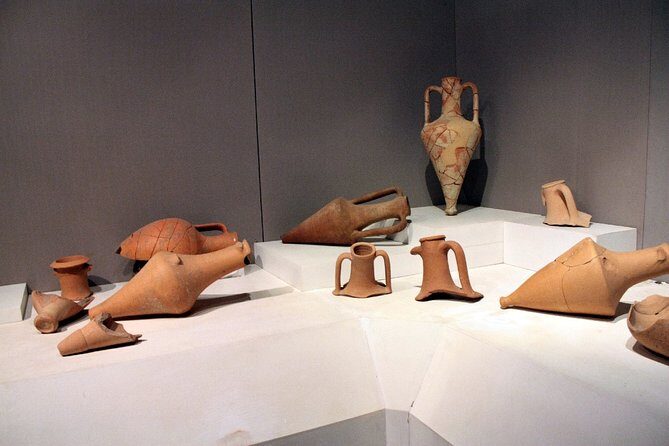
- Pick 3 artifact categories you’ll actively look for. For this museum, I’d choose tomb-related pieces, personal items like jewelry, and anything medical or practical (the museum has surgical tools you’ll want to catch).
- Slow down only at the moments that connect eras. This place moves through Hellenistic, Roman, and medieval periods, so try to find transitions rather than reading everything equally.
Because the museum is family-friendly, you can also adjust if you’re traveling with kids. If they start to lose interest, you can steer them toward the more concrete, visual categories—jewelry, tombstone imagery, and objects that look like real tools. Those tend to “hold attention” better than text-heavy panels.
What You’ll See: Tombstones, Surgical Tools, and Jewelry Across Eras
The artifacts are the headline here, and this museum does a solid job connecting objects to lived life—not just dead things.
Expect to spend time with ancient tomb-related material, including tombstones that help you understand funerary practice and identity in the region. These pieces often feel more personal than grand monuments because they’re closer to real humans: names, symbols, and the sense that someone mattered enough to be remembered.
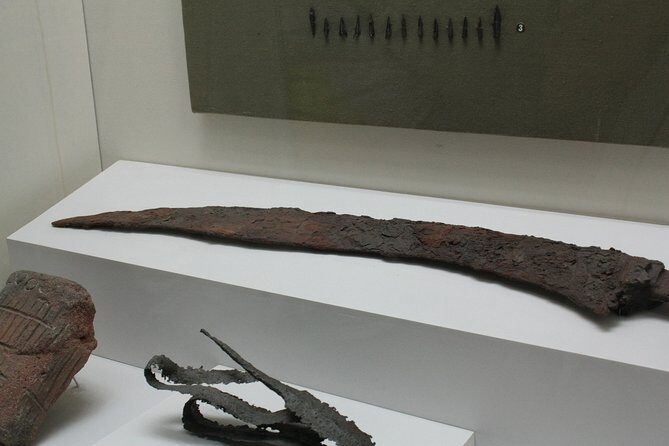
Then there’s the “wait, that’s from here?” effect when you see practical items such as surgical tools. It’s easy to think ancient history is all armor and politics. Medical tools bring you back to daily challenges and real needs—care, injury, healing. Even if you only catch a few examples, it adds depth to the story.
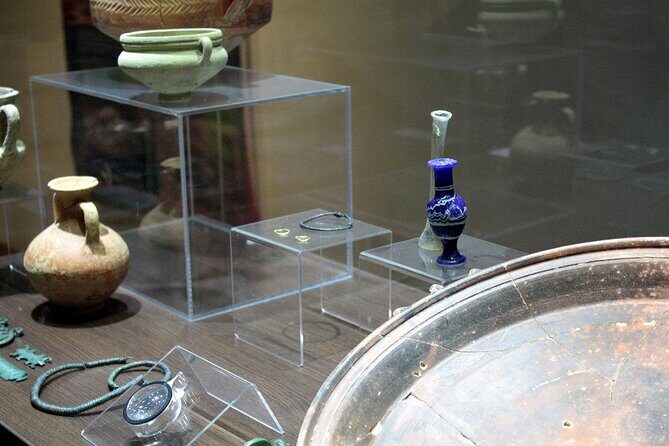
And don’t skip the personal side. Jewelry is a great visual entry point, especially if you’re visiting with friends or family who don’t want to sit and read for an hour. Jewelry also helps you understand trade, taste, and cultural influence because these styles don’t develop in isolation.
As you move through the rooms, the museum’s coverage across Hellenistic, Roman, and medieval history keeps the visit from feeling stuck in one era. The value is in seeing how the region’s culture shifted over time—rather than treating history like separate, disconnected chapters.
The Museum’s Origins Matter: The People Behind the Collections
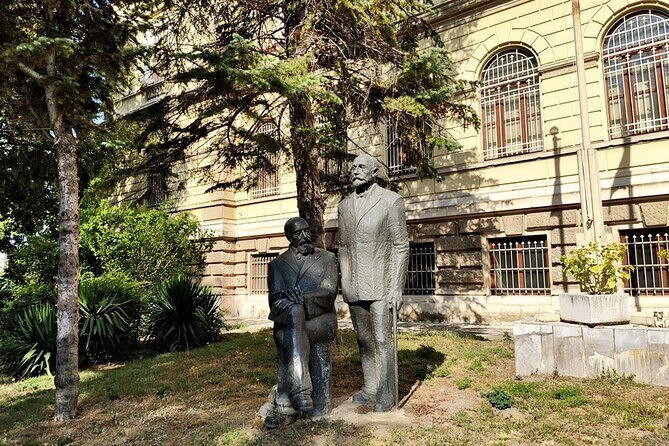
One reason I enjoy this particular museum more than I expect is that the building and the collection have strong local roots. The museum’s inauguration and development are closely linked with Herman and Karel Škorpil, Czechs by origin who became central figures in the educational and cultural work after Bulgaria’s Liberation from Ottoman rule.
They permanently settled in Varna in 1894, and in 1901, on 12 December, socially active figures and teachers established the Varna Archaeological Society. This society became the driving force behind long-term interest and study in Varna’s history and the broader region of Northeast Bulgaria—up to the point where an archaeological museum became a priority.
Why does this matter for you as a visitor? Because it changes the tone of the visit. You’re not just looking at objects in a generic display case. You’re seeing evidence of a local effort to preserve and interpret the past, with a building designed to educate and organize learning from the start.
You can also read our reviews of more guided tours in Varna

Entry Reality Check: Voucher Step and Pre-Booked Access
The main promise here is guaranteed entry in the sense that you pre-book your access, so you shouldn’t have to gamble on tickets at the door. That’s a real value in travel planning. It’s also helpful during busy seasons when “maybe they’re open” is not a plan.
But do keep one practical detail in mind: this is not handed to you as a simple ticket. You’ll receive a voucher step (a second voucher) that gives you access to the museum. So what I recommend:
- When you book, watch for the message that confirms your access instructions.
- If you’re traveling on a tight schedule, open your email right after booking and again the day before.
If something goes wrong, act quickly. One of the most frustrating travel problems is realizing too late that you didn’t have the right access step. Having your confirmation and voucher details ready reduces that risk.
Also double-check holiday timing. Museums can close for Bulgarian public holidays, and if your date lands on a closure day, entry can be affected. If your schedule is flexible, choosing a typical Tuesday to Saturday visit (when the museum is open) gives you the highest odds of a smooth experience.
Price and Value: Is $22.48 Reasonable?
At $22.48 per person, you’re paying for convenience and certainty, not just museum access. That can be worth it when:
- You want to avoid uncertainty.
- You’re on a schedule where losing a museum hour would be painful.
- You appreciate English-friendly support and a clean entry flow.
That said, the experience isn’t for everyone at that price point. At least one visitor felt the same museum admission cost could be cheaper when bought directly on the ground. So if you’re the type who’s comfortable with a bit of ticket-shopping and you’re not pressed for time, you may want to compare with on-site pricing before committing.
My balanced take: if English support and guaranteed entry matter to you, the price can feel fair. If you mainly want access and you’re trying to keep costs tight, you should consider whether the convenience markup makes sense for your trip budget.
Who This Self-Guided Museum Stop Fits Best
This is a good match for:
- Families who want a culture break that doesn’t require an evening commitment.
- Travelers who prefer independent pacing but still want English help.
- Anyone interested in the Varna region’s archaeology and the way the area’s history connects across multiple periods.
It’s also sensible if you’re trying to avoid the “all beach, no brain” vacation pattern. A museum visit like this adds variety, and the artifact categories (tomb-related material, surgical tools, jewelry) keep it from feeling one-note.
Should You Book This Varna Archaeological Museum Ticket?
Yes, I’d book it if your goals are simple: get into the museum without stress, spend a couple of hours at your own pace, and follow the story through English context.
I would think twice if you’re extremely price-sensitive and you’re comfortable buying admission directly, or if your visit date lines up with a public holiday when museums may close. In that case, the biggest risk isn’t the museum—it’s timing.
If you want a practical, family-friendly way to experience Varna’s past between seaside plans, this ticket-and-entry setup is a solid choice.
FAQ
What is included in the Varna Archaeological Museum self-guided experience?
Your purchase includes an admission ticket for the museum, and it’s designed for self-guided visiting with English offered.
How long should I plan to spend at the museum?
Plan around 2 to 3 hours, approximately.
What days and hours is the museum open?
The opening hours provided are Tuesday to Saturday, 10:00 AM to 5:00 PM.
Is the experience available in English?
Yes, the experience is offered in English.
Is this a guided tour with a live guide?
The experience is described as self-guided, with your ticket included for museum entry.
Do children need to be accompanied by an adult?
Yes. Children must be accompanied by an adult.
How will I receive the access to the museum?
The information notes that it is not an actual ticket; you will receive a second voucher to have access to the museum.
What is the maximum group size?
The maximum number of travelers is 15.
Is there free cancellation?
Yes. You can cancel up to 24 hours in advance for a full refund.