REVIEW · SOFIA
Communist Walking Tour of Sofia
Book on Viator →Operated by 365 LTD · Bookable on Viator
Sofia keeps its Cold War clues in plain sight. This guided walk links everyday life under communism to the actual buildings you’ll see in central Sofia, from Soviet-era monuments to cultural landmarks. I especially like how the guide frames ideology as real daily life, not just slogans.
I also like the route hits the big hitters without turning into a museum day. You’ll cover the Monument to the Soviet Army, the National Palace of Culture (NDK), and even a Berlin Wall piece in the final stretch. The only real consideration: the 4:00 pm start means the last part can feel darker in winter, so bring layers and be ready for lower light.
In This Review
- Key things to notice before you go
- Why this communist walking tour makes Sofia easier to read
- The 4:00 pm meeting point and the walk length that matters
- Stop-by-stop Sofia: what each landmark is really doing
- Sofia Court House: state power at the very start
- The Palace of Justice area: 365 Association Sofia Tours viewpoint
- Ancient Orthodox Church Saint Parascheva (Old St. Petka): religion under pressure
- The Presidency Building: the Soviet Army arrival story
- Former Bulgarian Communist Party Headquarters and Largo Complex: the Red Star and Lenin
- City Garden and the mausoleum story
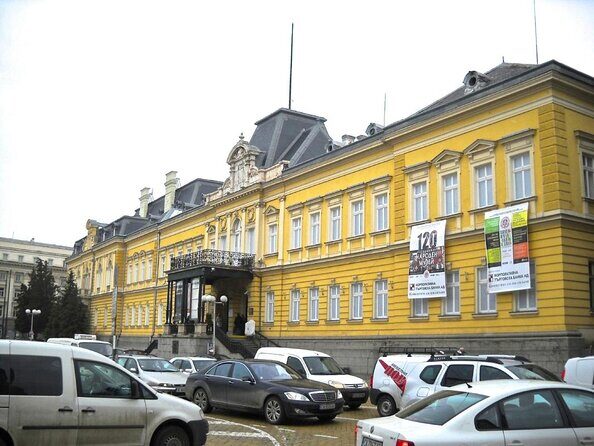
- The former Royal Palace building: early communist days
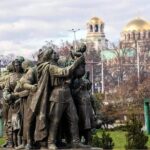
- Soviet Army Monument: controversy, graffiti, and uprisings
- National Palace of Culture (NDK): the biggest communist landmark
- Berlin Wall piece: the ending story in the park
- What you’ll learn: Bulgaria’s communism explained through streets and symbols
- Guides and group size: how to get value from a 3-hour walk
- Price and value: is $21.77 fair?
- Who this Sofia communist tour is best for
- Should you book this communist walking tour of Sofia?
- FAQ
- How much does the Communist Walking Tour of Sofia cost?
- How long is the tour?
- What time does the tour start, and where do I meet?
- Where does the tour end?
- Is the tour offered in English, and do I get a mobile ticket?
- Are there admission fees at the stops?
- What’s the maximum group size?
- What is the cancellation policy?
- Can children join, and are service animals allowed?
Key things to notice before you go
- Sofia’s communist landmarks on a single walking route, from courts and churches to NDK
- A guided story focus, including why communism rose and fell in Bulgaria
- Stop timing that keeps pace (most stops are around 10 minutes; the longer ones are the Soviet Army Monument and the Berlin Wall piece)
- Free admission at each stop, so your money goes toward the guide instead of tickets
- Small group cap of 25, which makes it easier to ask questions
- English-language tour with a mobile ticket you don’t have to print
Why this communist walking tour makes Sofia easier to read
If you want to understand Sofia, you can’t just look at pretty facades. You need to know what each building was meant to represent, and who held power when. This tour uses communist-era sites as a map, so the city starts making sense fast.
I like that the stories aren’t stuck in abstract politics. The guide connects ideology to everyday routines and public messaging, which is exactly what you’re looking at when you see symbols, monuments, and state-built landmarks. Expect a mix of the “what” and the “why,” including how communism took hold in Bulgaria and what ultimately broke the system.
And because it’s walking, you’re not only hearing history. You’re seeing how the city’s layout supports it: wide spaces for gatherings, civic buildings that project authority, and monuments placed where people would have to pass them again and again.
You can also read our reviews of more walking tours in Sofia
The 4:00 pm meeting point and the walk length that matters
The tour starts at 4:00 pm with your meet-up near Sofia City Court in the Old City Center area (bul. Vitosha 2). You then finish at the National Palace of Culture (NDK) area, right next to a piece of the Berlin Wall on the left side of the park.
This timing is great for daytime sights and afternoon light, but it’s not perfect for every season. In darker months, the last hour can be hard on visibility, especially if you’re hoping to get clear photos of details on buildings and monuments. If that’s your goal, plan warm, reflective clothing and consider a season with more daylight.
Also plan for a solid walk. Even with short stop-and-chat moments, the tour is about 3 hours, so comfortable shoes matter. The good news is that multiple guides are praised for pacing and break planning when weather turns.
Stop-by-stop Sofia: what each landmark is really doing
Below is what you’ll experience as you move through central Sofia, and why each stop is worth your time. Most stops are about 10 minutes, with a bit more time at the Soviet Army Monument and the Berlin Wall piece.
Sofia Court House: state power at the very start
You begin at the Sofia Court House area. This isn’t just an opening photo moment. The point here is to show how “law and order” worked in communist Bulgaria, where official buildings weren’t neutral backdrops. They were part of the system’s authority.
Even without entering anything, the exterior setting gives you a quick visual cue: this is where the state signals control. It’s a smart first stop because it frames everything else you’ll see later.
The Palace of Justice area: 365 Association Sofia Tours viewpoint
Next you head to the Palace of Justice area (associated with the 365 Association Sofia Tours start point). This continues the theme of institutions—who defines rules, who enforces them, and what citizens were expected to accept.
If you’re new to the topic, this section is useful. You’ll start seeing a pattern: communist influence wasn’t only expressed through statues and posters, but also through courts, administrative buildings, and public authority.



Ancient Orthodox Church Saint Parascheva (Old St. Petka): religion under pressure
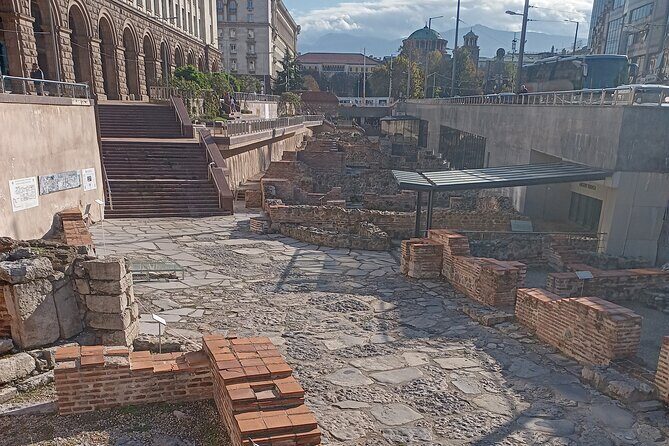
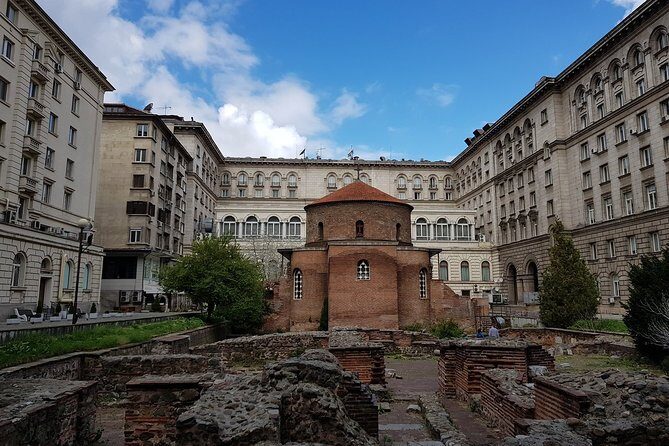
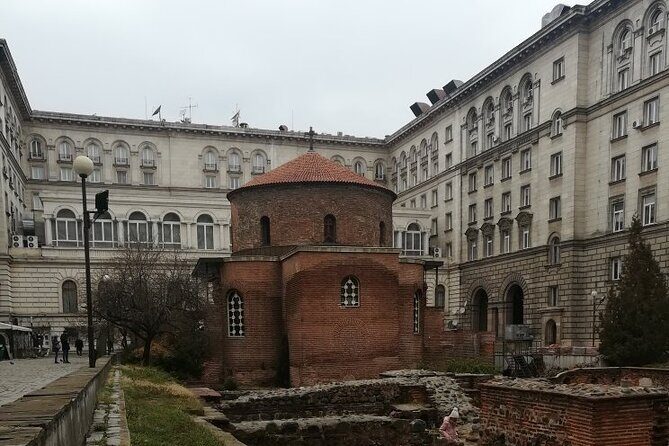
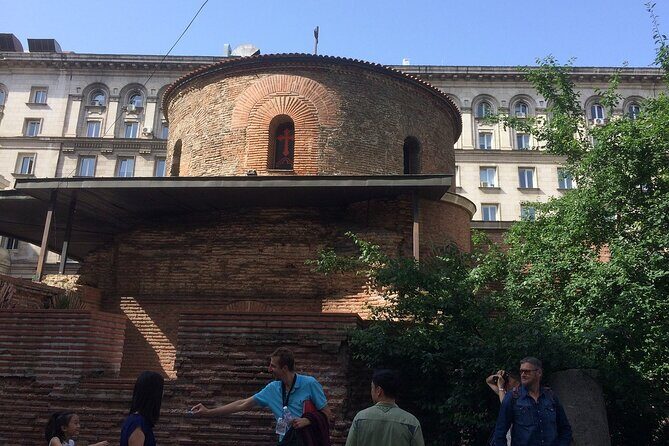
Then comes a hidden-feeling moment: the Ancient Orthodox Church Saint Parascheva, the old St. Petka church. During the communist period, religion faced restrictions, pressure, and changing rules. This stop puts that tension in front of you through a place that still has a spiritual footprint in a state-centered era.
What I like about adding a church at this point in the walk is balance. You don’t just hear about ideology from above. You see how belief and tradition kept existing in everyday Sofia—even when political systems tried to reshape public life.
The Presidency Building: the Soviet Army arrival story
After the church, the tour moves to the Presidency Building and the story of the Soviet Army’s arrival in Bulgaria. This is where the Cold War shifts from theory to geography. You’ll connect the political timeline to a specific setting, so the “who arrived when” part of history becomes easier to remember.
Pay attention here if you want context for later stops like the Soviet Army Monument. The tour builds toward it.
Former Bulgarian Communist Party Headquarters and Largo Complex: the Red Star and Lenin
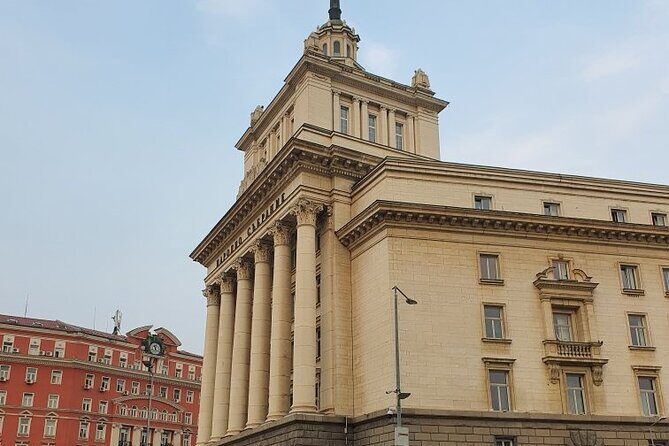
Next you’ll reach the former Bulgarian Communist Party Headquarters, tied to the Largo Complex in the heart of Sofia. This stop centers on the famous symbols you associate with Soviet-aligned communism—stories around the Red Star and Lenin’s place in the urban scene.
This is a key stop for understanding propaganda without needing lectures. The guide explains not only what the symbols represented, but also how they were meant to shape public attitudes.
If you enjoy architecture and street-level history, this is one of those moments where the buildings feel like they’re “arguing” with you. You can almost see how official power wanted to look permanent.
City Garden and the mausoleum story
Then the route heads to the City Garden for the story of the Mausoleum. Mausoleums and memorial spaces were not just about mourning. In many communist contexts, they also worked like political stages—places where ideology could be ritualized.
This stop helps you understand why public memory can be part of governance. The guide’s job here is to connect the space to how the regime tried to shape meaning.
The former Royal Palace building: early communist days
You’ll also pass the building of the former Royal Palace as it was used during early communist days. This is one of those historical turns that feels subtle until it clicks: new regimes often don’t just build from scratch. They repurpose what already stands.
That’s why this stop works. It reinforces a practical idea: power changes what it calls itself, and sometimes it changes who gets to use the same walls.
Soviet Army Monument: controversy, graffiti, and uprisings
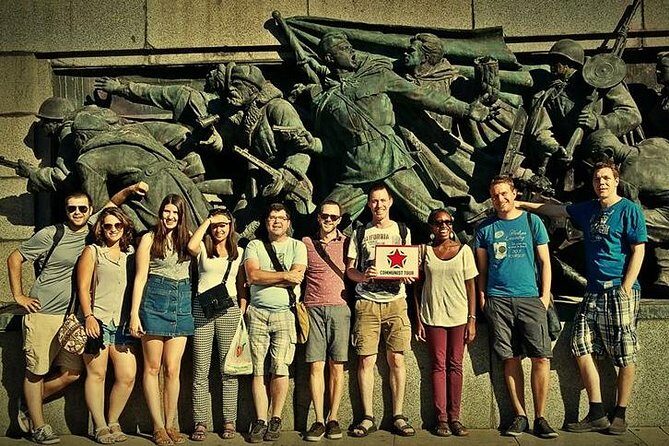
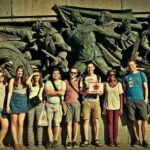
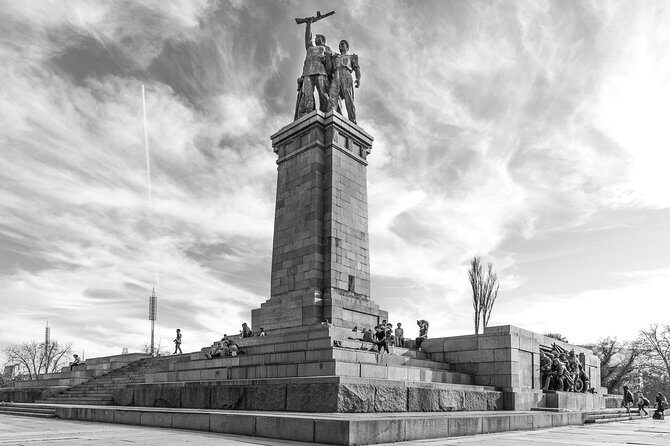
Now for the most debated stop: the Soviet Army Monument. Expect a longer moment here, about 15 minutes, because it carries layered meaning.
The guide talks about why it’s controversial, how it relates to early uprisings against the communist regime, and what you can read from the current visual life of the monument—including graffiti art. Even if you’ve seen photos online, seeing it in the context of Sofia feels different. You’re standing in a place where history has not stayed in the past.
If you care about how public spaces evolve after political shifts, this is the stop that delivers. It’s where you see the aftereffects in real time.
National Palace of Culture (NDK): the biggest communist landmark
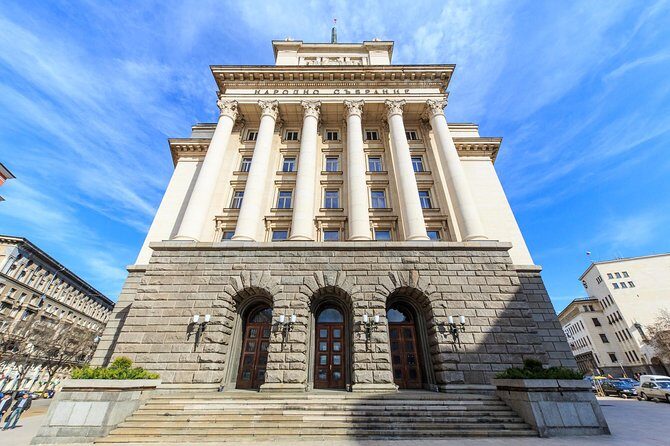
From there you head to the National Palace of Culture (NDK), Sofia’s biggest communist landmark and a well-known cultural hub. You’ll get a sense of how communist-era architecture tried to project confidence through scale and purpose.
This is about more than nostalgia. The tour helps you read the building as a statement: this is what the state wanted culture to feel like, who it was for, and how public life was organized.
Berlin Wall piece: the ending story in the park
The final stop is a piece of the Berlin Wall near NDK, and you’ll walk out next to it at the end point in the park area. The guide connects this replica-style marker to the story of how the communist era ended.
It works as a conclusion because it’s physical. You’re not only hearing about political collapse; you’re standing near a symbol people worldwide associate with the end of an era.
If the light is fading, focus on the main details the guide calls out rather than trying to photograph everything. The goal is to leave with a clear mental timeline.
What you’ll learn: Bulgaria’s communism explained through streets and symbols
This tour isn’t trying to turn you into a political scientist. It’s more practical: it explains communist ideology, why it gained power in Bulgaria, and why it eventually fell.
What makes that learning stick is the way it’s tied to visible markers. When you hear about power centers, you’re standing near civic buildings. When you hear about propaganda symbols, you’re looking at the urban layout that carried them. When you hear about resistance or criticism, you’re at sites that still show traces.
The best guides on this route are also praised for bringing in personal touches—often rooted in family experience—so the system feels human. Even if you know nothing beforehand, you’ll leave with a clearer sense of cause and effect: what the state promised, what people actually faced, and what changed as the Cold War shifted.
You’ll also get a sense that the guide aims for balance. Several guides are noted for presenting the pros and cons perspective, which helps you understand why communism had support and why it also bred deep resentment.
Guides and group size: how to get value from a 3-hour walk
The tour has a maximum group size of 25 people, which helps keep questions from getting lost. In a small-to-medium group, you can ask follow-ups when something clicks, instead of saving questions for the end.
The guides named in feedback—Nikola, Vasko, Yoan, Niki, Stefan, Vasil, Martin—are repeatedly described as engaging and responsive. That matters because a communist tour can turn into a list of facts if the guide isn’t good at pacing and storytelling. The best versions of this tour keep it moving, pause for breaks when weather hits, and answer questions without rushing.
I also like that this tour is offered in English. If you want the explanation, you’ll have it without reading from a guidebook.
And for note-takers: one practical tip from the field is to bring a notebook. The tour covers a lot of names, buildings, and connections, and it’s the kind of walk where a quick scratch page helps later when you’re sorting what you learned.
Price and value: is $21.77 fair?
At $21.77 per person for about 3 hours, this is one of the more budget-friendly guided history options in a city where monuments can otherwise cost time but not necessarily insight.
The value comes from three things:
- You get a local guide who interprets the sites instead of just pointing them out
- Stops are free of admission fees, so you’re not paying extra to access history
- You cover several major communist-era landmarks in one afternoon, including the most controversial and the most symbolic
If you’re trying to understand Sofia quickly—especially if your schedule is tight—this price makes sense because the guide turns “sightseeing” into “meaning.” You’re paying for context, not for entry tickets.
Who this Sofia communist tour is best for
This is a great fit if you want political and social context tied to real streets. You’ll like it if you enjoy:
- Reading monuments and architecture with a historical lens
- Learning how ideology shows up in daily life and public space
- Getting a structured introduction early in your Sofia trip
It may be less ideal if you need minimal walking or if you can’t handle an afternoon stroll. The route covers distance, and the tour is built around outdoor viewing and short stop moments.
Also, if you’re visiting in winter, plan for cold and reduced daylight since the 4:00 pm start can make the end feel dim.
Should you book this communist walking tour of Sofia?
I’d book it if you want your Sofia trip to have context, not just photos. This route gives you a clear line through Bulgaria’s communist era using the city itself as your classroom, and it ends on a strong symbolic note near the Berlin Wall piece at NDK.
Skip it only if you dislike walking in the cold, or if you want a purely relaxed sightseeing day with minimal political discussion. Otherwise, this is a smart, good-value way to understand what you’re looking at while you’re still there.
FAQ
How much does the Communist Walking Tour of Sofia cost?
It costs $21.77 per person.
How long is the tour?
The duration is about 3 hours.
What time does the tour start, and where do I meet?
The tour starts at 4:00 pm. You meet near Sofia City Court, Old City Center, bul. Vitosha 2, 1000 Sofia.
Where does the tour end?
The tour ends at the National Palace of Culture (NDK), blvd. Bulgaria, 1463 Sofia, next to a piece of the Berlin Wall on the left side of the park.
Is the tour offered in English, and do I get a mobile ticket?
Yes, the tour is offered in English and you’ll receive a mobile ticket.
Are there admission fees at the stops?
No. The stops are listed as admission ticket free.
What’s the maximum group size?
The tour has a maximum of 25 people.
What is the cancellation policy?
You can cancel for free up to 24 hours before the experience starts for a full refund.
Can children join, and are service animals allowed?
Children must be accompanied by an adult. Service animals are allowed.