REVIEW · SOFIA
Plovdiv full-day tour in Italian
Book on Viator →Operated by Traventuria · Bookable on Viator
Plovdiv feels like a time machine. A day trip from Sofia gives you an organized walk through Plovdiv Old Town plus a guide who uses the drive to explain Bulgarian life. I especially like the way the tour layers Thracian, Roman, and Byzantine stories into places you can actually stand in. One thing to consider up front: the cobblestones are real, and the minibus seating can be hard on your back if you’re sensitive.
What also makes this outing work is the balance. You get a guided loop first, then you’re set loose for an hour and a half to shop, eat, or just soak in the streets—at your pace. If you want a simple day plan that doesn’t require trains, tickets, or stress, this is it.
The logistics are straightforward: you meet in Sofia early, ride an air-conditioned minibus about two hours each way, and roll back to the same meeting point. With a maximum of 30 people, it’s usually small enough to ask questions without waiting forever.
In This Review
- Key highlights I’d plan around
- From St. Alexander Nevsky to Plovdiv: the 9am start and what the drive adds
- Plovdiv Old Town on cobbles: what the guided walk is really doing
- Ancient Theatre of Philippopolis and Roman Stadium: seeing ruins with context
- The hour and a half free period: Glavnata, Kapana, and your best lunch plan
- Comfort and the minibus reality check: what to pack and what to watch
- Guides in action: Italian-speaking, and why names matter
- Price and value from Sofia: what $34.39 gets you
- Should you book this Plovdiv day trip from Sofia?
- FAQ
- FAQ
- How long is the Plovdiv full-day tour from Sofia?
- Where do I meet in Sofia?
- What’s included in the price?
- Are entrance fees included?
- Is there free time in Plovdiv?
- What time does the tour start?
- Is the tour suitable for people with mobility issues?
Key highlights I’d plan around
- Two guided blocks: a morning Old Town walk and a structured history talk during the drive
- Ancient sights you can see on foot like the Ancient Theatre of Philippopolis and the Roman Stadium
- Free time that fits real life, not just photos: lunch on your own, plus shopping and wandering
- Kapana and local wine options in the area known for bars, graffiti, and nightlife energy
- A guide-led feast-day bonus possibility: some departures have included Bachkovo Monastery, even during busy celebration days
From St. Alexander Nevsky to Plovdiv: the 9am start and what the drive adds
Your day starts in central Sofia at the St. Alexander Nevsky area, with departure scheduled for around 9:00 am. You’ll meet at the Patriarchal Cathedral St. Alexander Nevsky in Sofia Center, then head out from the parking lot behind it. Plan to arrive a few minutes early so you’re not stuck rushing at the last second.
The ride to Plovdiv takes about two hours, mostly along the motorway. This isn’t dead time. The guide uses the trip to set context—Bulgarian history, culture, economy, and nature—so when you reach Plovdiv, the city doesn’t feel like a random pile of ruins. It’s the difference between seeing old stones and understanding why people lived here, fought over it, and rebuilt it.
If you’re the type who likes a good “why should I care?” story before the walking begins, you’ll probably enjoy that setup. If you prefer quiet time, bring something to tune out the chatter, because the guide is part of the experience.
A few more Sofia tours and experiences worth a look
Plovdiv Old Town on cobbles: what the guided walk is really doing
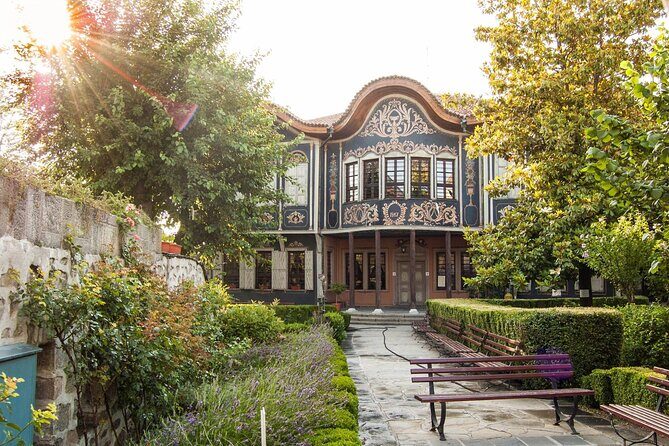
When you arrive, you’re in one of Europe’s oldest continuously inhabited towns. The walking tour is about 2.5 hours, and it’s paced for seeing the major highlights without turning into a sprint. You’ll move through narrow, cobbled streets—so your feet will do some work and your sense of direction won’t always be straight.
Here’s the real value of this part: the guide connects layers of time. Plovdiv has Thracian roots, then Roman, then Byzantine influence, plus later Slavic and Ottoman-era history. You don’t just get names—you get a sense of how each period shaped what you see, from street patterns to the types of buildings that survive.
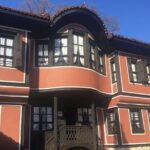
This is also where Bulgarian Renaissance town architecture often becomes the star. Even if you’ve never studied architectural styles, the tour helps you notice what makes these facades different, and why certain houses and public spaces look the way they do.
Practical note: uneven surfaces are the rule, not the exception. If you’re worried about stability—knees, ankles, balance—this isn’t the day to “tough it out.” Comfortable walking shoes are not optional.
Ancient Theatre of Philippopolis and Roman Stadium: seeing ruins with context
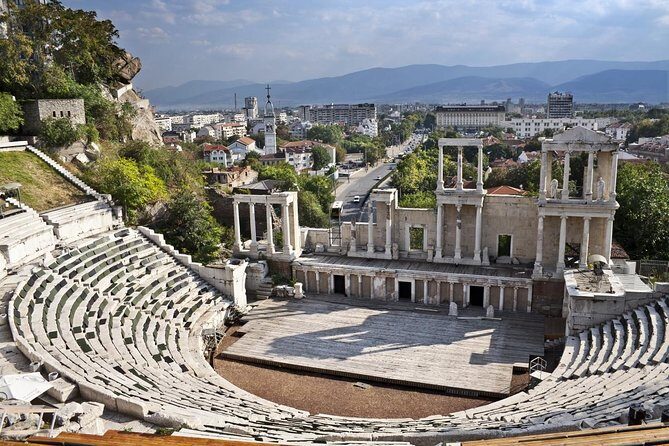
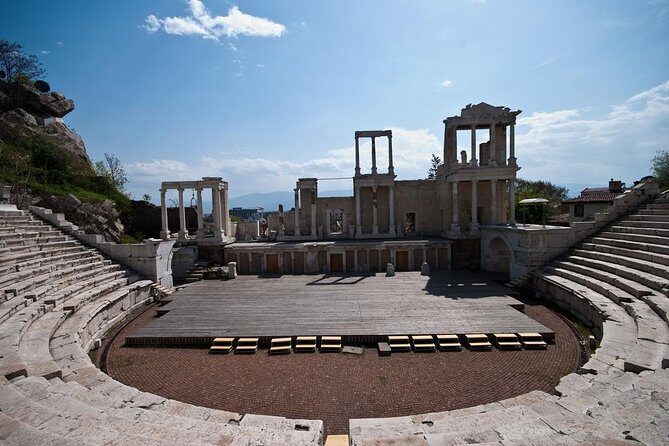
One highlight that gets called out is the Ancient Theatre of Philippopolis, a second-century structure you can’t really ignore. The point of including it on a guided route is not just the size—it’s what the guide helps you imagine. With the right explanations, a theatre becomes a picture of community life: gatherings, performances, civic pride.
You’ll also be introduced to the Roman Stadium and other key stops in the Old Town area. Taken together, these sites give you a layered sense of Plovdiv as a lived-in city, not just a collection of monuments. This matters because Plovdiv doesn’t feel like a single “theme park” of one era.
If you’re hoping for very deep academic detail, you might want to set your expectations for what a day trip can cover. The time is limited, and the tour moves through the big-ticket items with a broad, story-driven approach. Some visitors prefer more focus on one specific period; this route is built to cover multiple eras.
The hour and a half free period: Glavnata, Kapana, and your best lunch plan
After the guided Old Town segment, you get about 1.5 hours to explore independently in the city center. This is where you decide how you want your day to feel: calm, food-focused, or wander-and-snap-photos.
A helpful target is Glavnata, which is described as the longest pedestrian street in Europe. It’s made for strolling, shopping, and stopping when something catches your eye. I like having a named street like this because it prevents that awkward free-time feeling of wandering without a plan.
Then there’s Kapana, the neighborhood with a bohemian vibe, chic bars, and plenty of graffiti. If you want atmosphere, Kapana is a good place to lose yourself for a while. It’s also tied to wine culture—Plovdiv’s region is known for wine production, and Kapana offers places where you can sample local red or white.
Lunch is on your own expense, so keep it simple and choose what’s easy to reach from where you’re walking. If you’re hungry after the guided segment, don’t try to “optimize” too hard—just pick a spot and keep moving.
If the day happens to line up with local celebrations—there’s mention of arts events tied to Plovdiv’s European Capital of Culture nomination for 2019—your free time can feel more alive than usual. That’s the kind of timing that turns a normal city stroll into a memorable one.
Comfort and the minibus reality check: what to pack and what to watch
This tour uses an air-conditioned minivan, and it’s included in the price. That’s a plus for a Bulgarian day trip because you’re traveling between Sofia and Plovdiv in comfort, not on your own. The trade-off is that some people have mentioned uncomfortable seats, specifically if you have a sensitive back.
Also, remember: you’re walking on uneven cobblestones. That means the main comfort issue isn’t just the vehicle—it’s what your ankles and knees deal with during the Old Town portion and any extra wandering you do during free time.
I’d pack the basics:
- comfortable walking shoes with solid grip
- a light layer (buildings and shade can change the feel of the day)
- water, especially if you plan to walk longer in Kapana
If rain shows up, the cobbles can get slick. The tour is still a good value, but you should take extra care with footing.




Guides in action: Italian-speaking, and why names matter
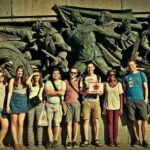
The tour includes a professional Italian-speaking guide. In practice, what really affects your day is how clearly the guide communicates and how well they manage the pacing. You might even end up with a more personal feel than you expect, since group sizes can be small.
One name that’s been shared in past experiences is George, praised for answering questions on Bulgarian history and folklore and for practical advice beyond the tour itself. Another guide, Nikolay, has been described as friendly and highly knowledgeable, with strong language delivery. There’s also a mention of Martin in a smaller setup, which suggests that on some days the group experience can feel closer to a private car tour.
My advice: if you care about specific questions—religious traditions, Ottoman-era influences, how Renaissance architecture fits into local identity—write them down. Ask early, especially during the drive, when the guide has time to steer the conversation.
And if you’re not comfortable with Italian, plan to rely on body language and context, or check whether your guide can accommodate other languages in that group. The tour is built around Italian, so don’t assume everything will work perfectly if you only speak English.
Price and value from Sofia: what $34.39 gets you
At $34.39 per person, this is priced like a straightforward day trip, and that’s a good sign. You’re paying for transport, a guided Old Town walk, and a guide to translate the “what am I looking at?” part of Plovdiv.
Entrance fees are not included, so don’t assume every stop is free. That said, the tour is structured around major sights where you can often see plenty without paying for everything on-site. If there are museums or specific entrances you want, budget extra.
Is it great value? For most people, yes—because you’re not doing the logistics yourself. Two hours each way by minibus plus a guided walk of about 2.5 hours is a solid chunk of sightseeing for a single day. The free time is also meaningful, not leftover crumbs.
The main value question is whether you’re happy with a broad overview. If you want deep, single-theme history (say, only Byzantine architecture or only Roman engineering), you may find the pacing a little general. On the other hand, if you want a smart first visit to Plovdiv, this is the kind of structure that helps you decide what to return for later.
Should you book this Plovdiv day trip from Sofia?
Book it if you want:
- a guided first taste of Plovdiv’s Old Town with Roman and Byzantine highlights
- a no-fuss day structure from Sofia with time to wander on your own
- a mix of history explanations and free-choice wandering (Glavnata and Kapana are ideal for this)
Skip it (or at least think twice) if you:
- have trouble with uneven cobblestones
- need very comfortable seating on long rides
- prefer very deep specialization over a broad “see a lot” itinerary
Also, if you love asking questions, bring curiosity. This tour tends to work best when you engage with the guide during the drive and the walking portions.
FAQ
FAQ
How long is the Plovdiv full-day tour from Sofia?
The tour runs about 9 hours in total.
Where do I meet in Sofia?
You meet at the Patriarchal Cathedral St. Alexander Nevsky, Sofia Center, pl. Sveti Aleksandar Nevski, 1000 Sofia, Bulgaria.
What’s included in the price?
You get a professional Italian-speaking guide and transport by air-conditioned minivan.
Are entrance fees included?
No. Entrance fees are not included, though the tour does include major sights to see during the walk.
Is there free time in Plovdiv?
Yes. You’ll have about 1.5 hours of free time to explore the city center on your own.
What time does the tour start?
Start time is listed as 8:59 am, with departure from Sofia around 9:00 am.
Is the tour suitable for people with mobility issues?
The tour is not recommended for those with walking disabilities because the route includes uneven surfaces and cobblestones. Comfortable walking shoes are recommended.