REVIEW · SLIVEN
Skip the Line: Medieval Tuida Fortress tours
Book on Viator →Operated by VisitBulgariaOn Bespoke Experiences · Bookable on Viator
One fortress can feel like a time machine. Tuida Fortress in Sliven is a layered ruin story—from Romans to Bulgars—made easier with a mobile ticket and on-site activities. It’s the kind of outing where the walking is short, but the context is big.
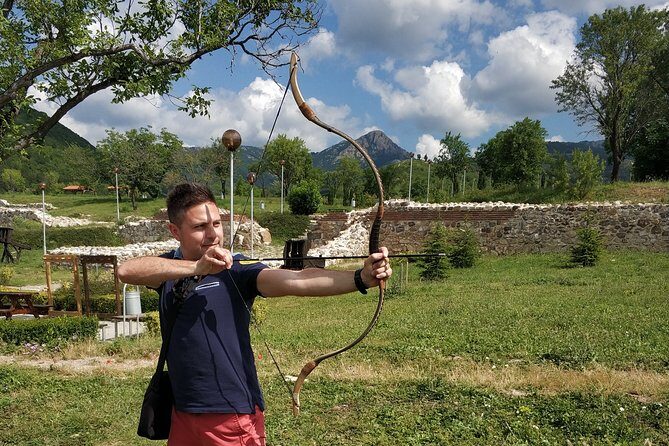
I especially love the hands-on fun: archery and the chance to wear medieval dresses if you book that option. It turns the site from “look at stones” into “do a small piece of medieval life,” which is great for families.
One consideration: if you go without the guided component, you may feel like you’re mostly seeing walls and sun-faded signs, with paths that can be a bit awkward. In other words, you’ll get more from Tuida when someone helps you read the place.
In This Review
- Key Things I’d Prioritize
- Why Tuida Fortress in Sliven is worth your time
- The “Skip the line” day format (and how to plan your pace)
- Tuida’s ruins: a guided path through Romans, Bulgars, and early Christians
- What you actually do there: archery, medieval dresses, and medieval games
- How the English guidance and e-guide improve the visit
- The archaeology details that make Tuida more interesting than it looks
- Practical tips: shoes, what to bring, and how to avoid a frustrating visit
- Value check: is $8.16 a good deal for Tuida?
- Should you book the Tuida Fortress tour?
- FAQ
- Is the Tuida Fortress tour offered in English?
- How long does the tour take?
- Do I get a ticket on my phone?
- What activities are included?
- Are food and drinks included?
- How big is the group?
- Can I get a refund if I cancel?
Key Things I’d Prioritize
- Layered eras you can actually track: Goths, Huns, Romans, early Bulgars, and Early Christian worship all leave traces here.
- Optional hands-on activities: archery and medieval dress are available when you book the right option.
- English support: the experience is offered in English, with guiding available if you choose that option.
- A standout religious site inside the fortress complex: a basilica and a unique baptistery with murals and mosaics.
- Scale that’s easy to picture: the fortified area is about 40 decares (roughly 10 acres).
- Small-group feel: the tour caps at 50 travelers, so it’s not a crush at the ruins.
Why Tuida Fortress in Sliven is worth your time
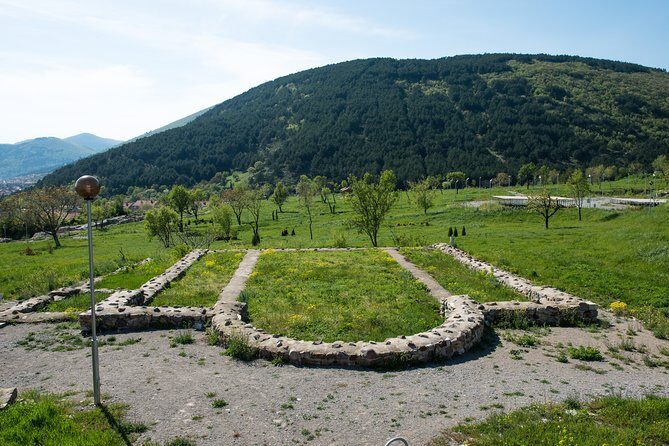
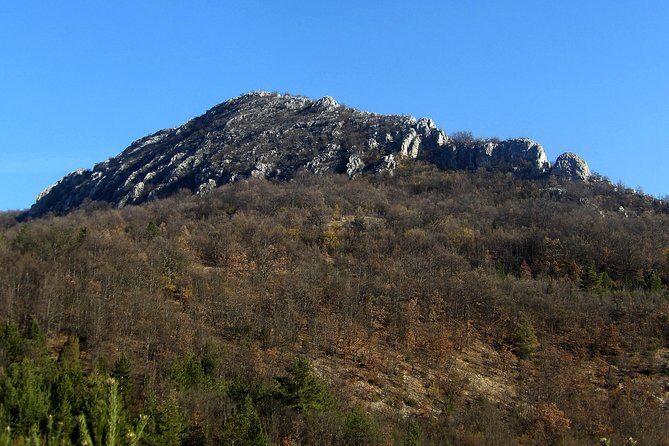
Sliven isn’t just a stop to pass through. It’s a place where the past stacks up in layers, and Tuida Fortress is one of the best spots to see how that stacking happened.
What I like about Tuida is that it’s not frozen in one era. The site was spared in the Goth invasion of 378 AD, later destroyed by the Huns in the 5th century, rebuilt under Roman Emperor Anastasius I (491–518 AD), and then destroyed again around 598–599 AD—very possibly during Avar and Slavic incursions. That means the ruins you see weren’t all made the same way, or for the same people.
And then the story shifts again. Around 705 AD, the area became part of the First Bulgarian Empire, after Khan Tervel gained the Zagore region south of the Balkan Mountains. A Bulgarian settlement rose on top of the fortress, and archaeological finds—like a lead seal tied to Knyaz Boris I Mihail (852–889 AD)—help confirm the importance of what was built there later.
You can also read our reviews of more tours and experiences in Sliven.

The “Skip the line” day format (and how to plan your pace)
This is a 1-day experience that keeps things simple: one main focus, Tuida Fortress, plus activities on-site if you book them. The tour uses a mobile ticket, which is handy when you don’t want to wrestle with paper while you’re already figuring out shoes, sun, and where to start.
With a maximum of 50 travelers, it’s typically easier to hear instructions and regroup without chaos. Also, because there’s only one core site, you can plan a relaxed rhythm instead of feeling like you’re sprinting between attractions.
One practical thought: plan for a full day window even if the walking isn’t long. You’ll want time to read what you can (especially if you’re using the e-guide) and to fit in archery/medieval dress moments if that’s your thing.
Tuida’s ruins: a guided path through Romans, Bulgars, and early Christians
Tuida’s walls and structures aren’t just “old stuff.” They’re clues to different phases of rebuilding and use.
After Roman Emperor Anastasius I rebuilt the fortress, the site preserved parts of the earlier architecture but also enhanced it. Later, when the Bulgarians took over the area, they repaired the fortress walls and the aqueduct, and added new buildings inside using marble slabs produced by stone cutters in Veliki Preslav (the Bulgarian capital, often called Great Preslav).
If you like the small details, Tuida rewards you. Some bricks bear an Ancient Bulgar sign that resembles |Y|. You can also see evidence that Tuida had a religious role early on, with written sources indicating it was the seat of a bishop from the 4th century AD onward.
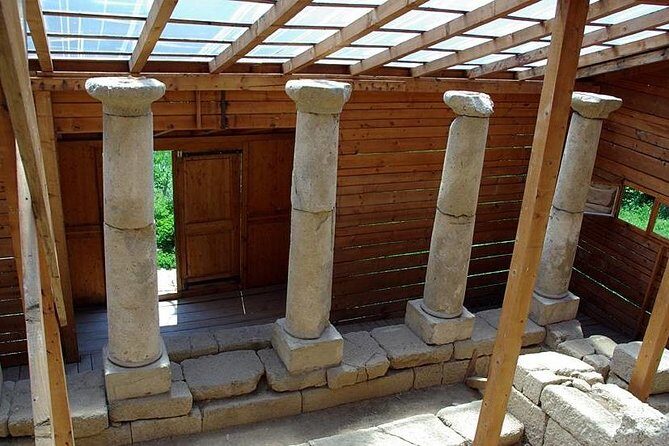
Inside the fortress complex, the Early Christian layer is one of the big reasons to care. Archaeology points to a cult complex used between the 4th and the 13th centuries, including a three-nave, one-apse Early Christian basilica—and a unique baptistery decorated with murals and mosaics. Even when ruins look “not impressive” from the outside, this interior religious art and architecture can change the whole mood of the visit.
There’s also a classic “look for the names” element. Two marble pedestals dedicated to gods Apollo and Zeus include the name of the fortress as Tuida or Suida (known in written sources as Tsoida). That naming detail matters because it helps anchor what you’re seeing in documented references rather than vague guesswork.
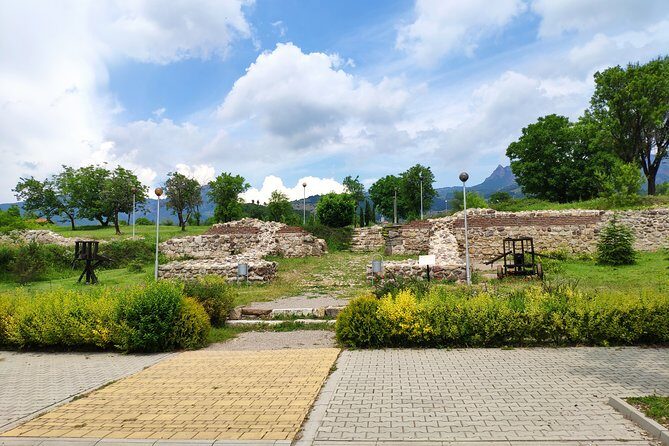
And if you ever wondered whether the fortress was the whole town: it wasn’t. The walls encompassed about 10 acres, but archaeologists found ruins of a larger basilica outside the fortified area, suggesting the settlement extended beyond the walls.
What you actually do there: archery, medieval dresses, and medieval games

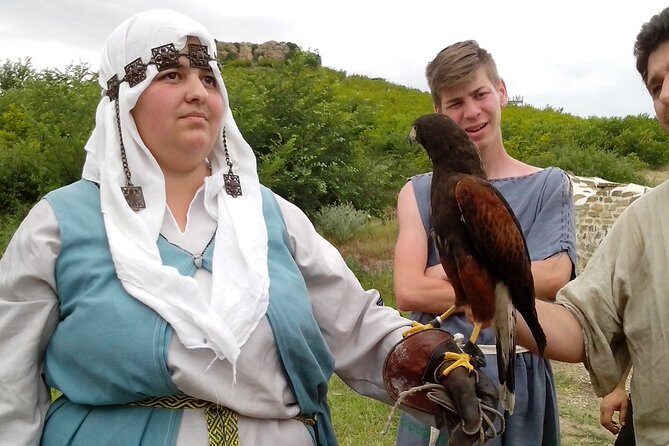
This is where Tuida becomes more than a history lesson. If you book the activities option, you can add archery and medieval dress to the visit, and the day gets more playful fast.
Why this works: standing still and reading alone is one way to learn. But doing a role-based activity—like dress-up and hands-on games—helps your brain remember details you might otherwise forget after the photos. It’s also a good way to keep kids engaged without turning the visit into a chore.
Archery and medieval costumes also change how you move through the site. Instead of walking like you’re just checking off a landmark, you’re moving with purpose: stop, listen, try, and then compare what you experienced to the ruins around you.
One note of realism: activities are available only if the relevant option is booked. If you’re aiming for archery and dress, check that you’ve selected the right add-on before you go.
How the English guidance and e-guide improve the visit
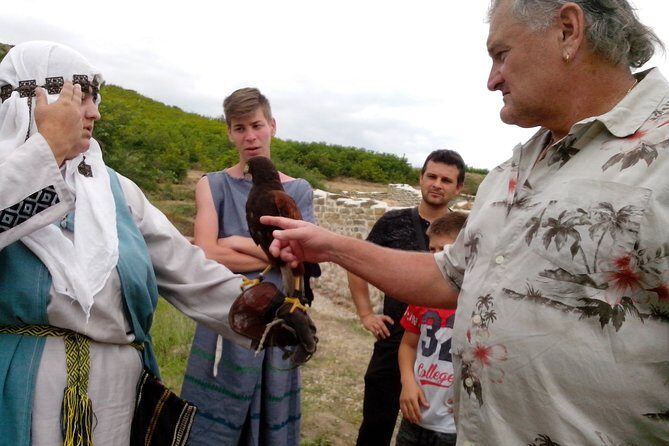
If you’re the type who loves “seeing the site the way it was meant to be seen,” choose the guided option. The value is that someone can connect what you’re looking at—walls, towers, gates, pedestals, baptistery details—to the timeline of invasions, rebuilding, and religious use.
The experience is offered in English, and there’s also an e-guide included. The e-guide is especially useful if you want to go at your own pace inside the ruins while still having context for what you’re viewing.
I’d call out one reason this matters. Tuida isn’t trying to be a theme park. Some surfaces and signage can be hard to read when the sun hits hard, and if you don’t have guidance you might feel like you’re mostly walking among stones and scrub. With help, those same stones become a story you can follow.
Also, photos are part of the included experience. So even if you spend extra time absorbing details, you’re not losing out on documentation.
The archaeology details that make Tuida more interesting than it looks
Tuida’s charm isn’t just the big monuments. It’s the variety of evidence left behind.
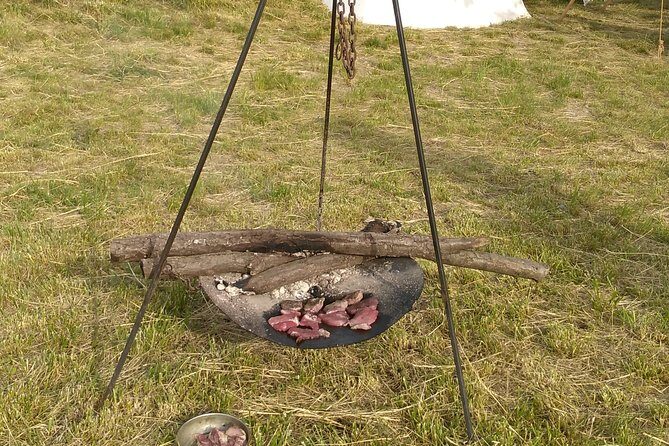
Excavations began in 1982 and later resumed in 2004. Finds include iron tools, ceramic vessels, ornaments, coins, and bones from 14 species of wild and domesticated birds. Yes, that’s a specific thing to know: species mentioned include Bonelli’s eagle (Aquila fasciata), western capercaillie (Tetrao urogallus), great bustard (Otis tarda), and common pheasant (Phasianus colchicus). That’s a reminder that a fortress wasn’t only military. It was also a place where people hunted, raised animals, and lived day to day.
You’ll also see structural archaeology: fortress towers and gates, building remains, and the fortress walls themselves. There’s even a 3rd century AD inscription describing the settlement as a market place. That little line matters. It supports the idea that Tuida served as a hub, not just a defensive structure.
When you connect the market clue with later religious layers (basilica and baptistery) and Bulgarian rebuilding (walls, aqueduct, marble-slab building work), you get a fuller picture of why the site kept being used and re-used across centuries.
Practical tips: shoes, what to bring, and how to avoid a frustrating visit
This outing is simple, but a few basics make a big difference.
First: wear comfortable shoes. Ruins and uneven ground are part of the deal, especially if you’re spending time moving around for photos and activities.
Second: plan for food on your own. Food and drinks aren’t included, so bring water. A small snack can also help if your day runs long, since the tour doesn’t list any built-in meal stop.
Third: keep in mind the pace. Most travelers can participate, and service animals are allowed. Still, it helps to be prepared for walking on site surfaces that may not feel like a museum floor.
Finally: if you’re sensitive to heat, schedule your time so you’re not stuck in full sun for long stretches. Even when you have signage, glare can make it harder to read, so you’ll enjoy the context more if you pace yourself.
Value check: is $8.16 a good deal for Tuida?
At about $8.16 per person, this is priced in the “surprisingly affordable” category, especially for a fortress site with English-language support and optional activities. For me, the value comes from what you can turn into a full experience: ruins plus an e-guide, plus the option for archery and medieval dress.
That said, value isn’t only ticket price. You should also factor in what you’ll spend nearby—food, drinks, and personal extras. Since those aren’t included, budgeting a bit for your own supplies is the only way to keep the day stress-free.
Also, consider whether you want guided interpretation. If you’re choosing the guided option, you’re paying for the extra layer of clarity—how to connect invasions, rebuilding phases, religious spaces, and archaeological finds into one coherent walk-through.
Should you book the Tuida Fortress tour?
Yes—if you want an easy one-day outing that turns a historic site into something you can actually understand and enjoy. I’d especially recommend booking if you like guided context and you’re interested in the on-site medieval activities like archery and medieval dress.
Book it with a “go prepared” mindset. Wear good shoes, bring water, and don’t assume the site will explain itself if you’re walking without guidance. Tuida rewards effort, but in a satisfying way: you leave with a timeline in your head, not just photos on your phone.
If you’re short on time in Sliven, this is one of the more meaningful ways to spend it—because Tuida isn’t one era. It’s many, stacked in stone.
FAQ
Is the Tuida Fortress tour offered in English?
Yes. The experience is offered in English, and there is also an e-guide included.
How long does the tour take?
It’s listed as about 1 day.
Do I get a ticket on my phone?
Yes. The experience includes a mobile ticket.
What activities are included?
Taking photos and an e-guide are included. Archery & medieval dresses are included only if that option is booked, and guiding is included only if the guiding option is booked.
Are food and drinks included?
No. Food, drinks, and personal expenses are not included.
How big is the group?
The tour has a maximum of 50 travelers.
Can I get a refund if I cancel?
Yes. You can cancel for a full refund up to 24 hours in advance.