REVIEW · SOFIA
Skopje North Macedonia Day Tour from Sofia
Book on Viator →Operated by V Travel Ltd. · Bookable on Viator
A border-crossing day that actually feels manageable. In one long stretch starting at 8:00am, you’ll get a guided sweep of Skopje with a maximum of 18 people and English-speaking guidance that turns monuments into real context, not just photos. I also like that the tour is set up for efficiency, with pickup and drop-off options so you’re not fighting logistics before you’ve even hit the road.
I especially like the mix of free and included stops. Old Bazaar and the area around Skopje Eye Bridge are easy wins for walking, people-watching, and street-photo energy, while the Museum City of Skopje time is built in with admission included.
The main drawback is the day length. This is a time-heavy drive from Sofia, and once you add borders, walking pace, and a few “quick photo” moments, the schedule can feel brisk—especially if it’s cold or rainy.
In This Review
- Key points before you go
- The Sofia-to-Skopje drive: why 12 hours feels longer
- Hotel pickup versus meeting point: your easiest first-day win
- Old Bazaar and Skopje’s Stone Bridge zone: the real starter pack
- Macedonia Square statues and the Philip of Macedon moment
- Mother Teresa Memorial House: short stop, strong context
- Museum City of Skopje: the old railway station with a time machine feel
- Osvogo Mountains photo stops: the break that makes the day worth it
- Pacing, walking pace, and how to avoid getting lost in the group
- Guides and storytelling: what the best version of the day feels like
- Price and value: is $106.93 a fair deal from Sofia?
- Who this Skopje day trip is best for
- Should you book this Skopje trip from Sofia?
- FAQ
- How long is the Skopje day trip from Sofia?
- What’s the meeting point in Sofia?
- Is hotel pickup included?
- What language is the tour offered in?
- How many people are in the group?
- What sights are included in Skopje?
- Are any of the stops free?
- Is Museum City of Skopje admission included?
- What if the weather is bad?
- How late can I cancel for a full refund?
Key points before you go
- Small group size (up to 18) keeps the day from feeling like cattle herding.
- Osvogo Mountains viewpoints add a real break from city streets and give you photo-worthy scenery.
- Old Bazaar to Macedonia Square via the Stone Bridge area is a natural route for first-time orientation.
- Mother Teresa Memorial House sits on Macedonia Street, on the former church site tied to her baptism.
- Museum City in the old railway station links Skopje’s timeline to the 1963 earthquake story.
- Bring some cash for small local stops where cards might not work.
The Sofia-to-Skopje drive: why 12 hours feels longer
This trip is all about momentum. You start in Sofia in the morning, cross the border, then spend your day inside Skopje before heading back. Expect it to be a long one: in practice, the drive is the biggest chunk, so you’ll want to treat this as a full-day outing, not a quick getaway.
Good planning makes a difference here. Your driver typically handles the border crossing smoothly, and there are restroom breaks on the way. One review-style detail I’d take seriously: the van time can be tiring, even when the vehicle is comfortable, so pack a snack and water for the in-between gaps.
If you want your day to go smoothly, aim to arrive early at the start location (and be ready for possible traffic at the border). On at least one day, people found the meeting point a bit hard to pin down, so building in a few extra minutes helps a lot.
You can also read our reviews of more tours and experiences in Sofia.
Hotel pickup versus meeting point: your easiest first-day win
The tour is described as having convenient hotel pickup and drop-off. But it also lists a specific start point in Sofia: Serdika Meeting Point – V Travel Day Tours Departures, Sofia Center, bul. Knyaginya Maria Luiza 2 (start time 8:00am). After the day trip, it ends back at the same meeting point.
Here’s my practical advice: if you’re staying in Sofia somewhere convenient, choose pickup if it’s available to you. Reviews included a tip that the meeting point can be near a mosque and opposite a McDonald’s—helpful if you’re trying to self-navigate, but not ideal when you’re rushing.
If you’re using the meeting point, show up earlier than you think you need. It’s the kind of detail that doesn’t sound important—until you’re standing there wondering where the correct van is.
Old Bazaar and Skopje’s Stone Bridge zone: the real starter pack
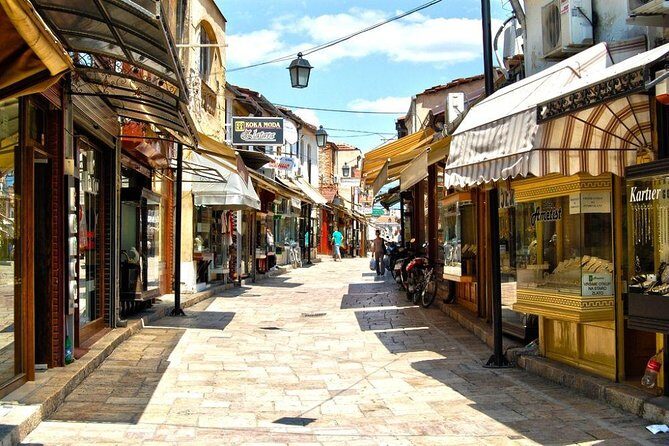
You’ll begin in the Old Bazaar area, one of Skopje’s oldest and largest marketplaces. It stretches along the eastern bank of the Vardar River, running from the Stone Bridge toward Bit-Pazar, and toward the Skopje Fortress side as well. The big idea here is simple: this isn’t a single “attraction,” it’s a whole trading neighborhood that’s been here for centuries, at least since the 12th century.
This stop is great for two reasons. First, you get walking context fast—what the city looks like at street level. Second, it’s free and flexible, so if you want to browse, take a slow turn, or grab a quick coffee without worrying about an admission line, you can.
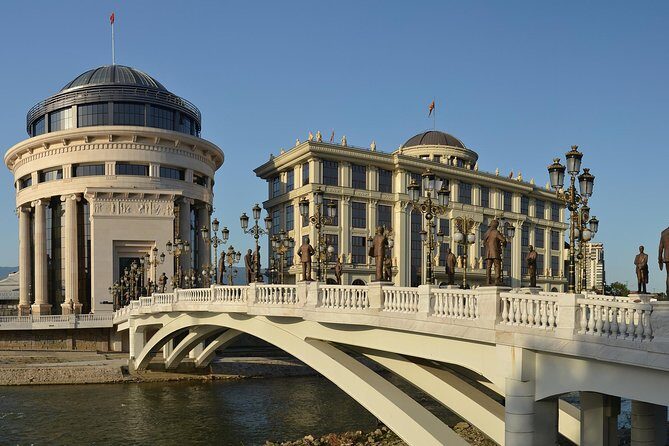
From there, the tour moves toward the Skopje Eye Bridge. The bridge is connected to the broader symbolism of the city: it’s considered a symbol of Skopje and tied into the city’s coat of arms and flag. You’ll likely see it in the context of the Stone Bridge connection between Macedonia Square and the Old Bazaar zone.
If you’re the kind of traveler who loves “first impressions,” this pairing does the job. It also helps you understand how Skopje blends Ottoman-era street life with newer civic design.
Macedonia Square statues and the Philip of Macedon moment
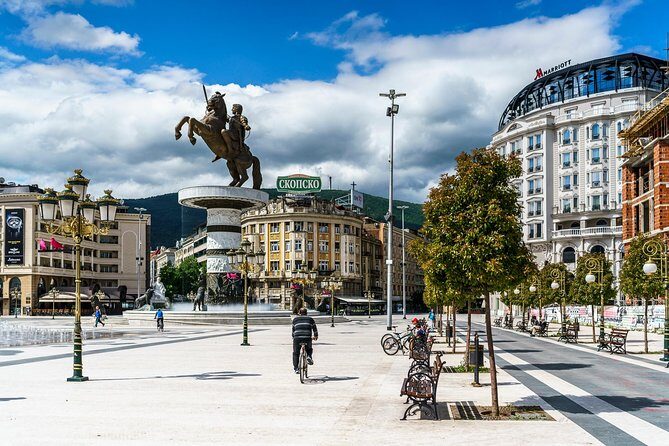
Skopje has a habit of mixing old and new in the same frame. Part of that shows up in the big monumental areas near Macedonia Square, where you’ll see large-scale public sculptures designed to brand the city’s identity.
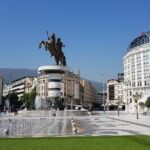
A headline sight here is the towering bronze warrior king Philip of Macedon statue—29 meters tall. This kind of landmark can feel like a photo stop at first glance, but it matters because it’s part of a bigger pattern: the city’s public art and symbols are meant to tell a story about heritage and political identity.
Right near that area, you’ll also encounter works connected to the theme of the Mothers of Macedonia—a fountain and statue concept being constructed in front of the warrior monument. Construction can be one of those “timing” factors: what you see will depend on the day and progress level, but the point is still there—this part of Skopje is visual, dramatic, and designed for street viewing.
If you want to get something useful out of a day trip, this is one of the places where you’ll see the city’s current face clearly. Even if you don’t love giant statues, you’ll understand why people have strong opinions about Skopje’s look.
Mother Teresa Memorial House: short stop, strong context
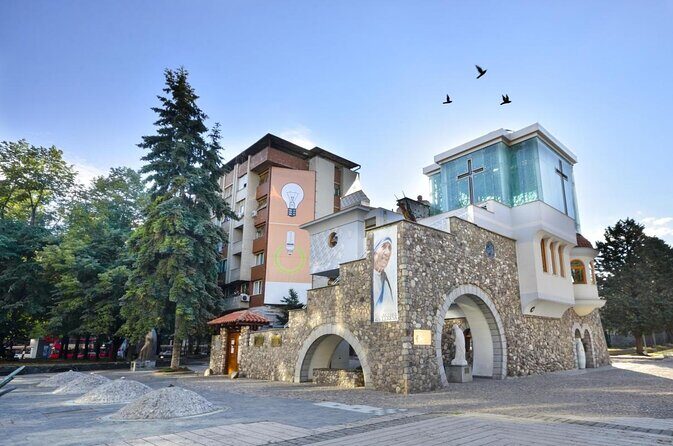
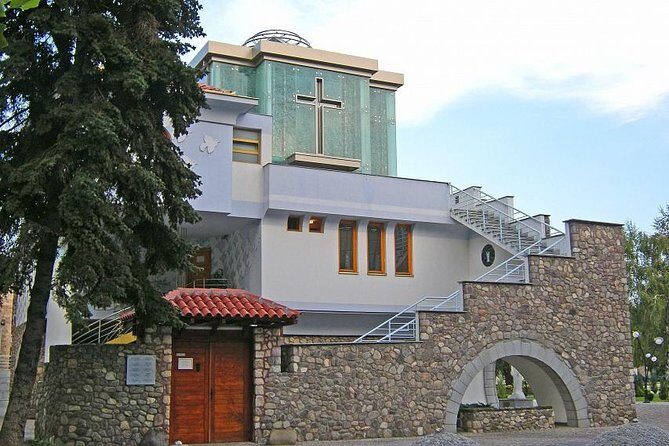
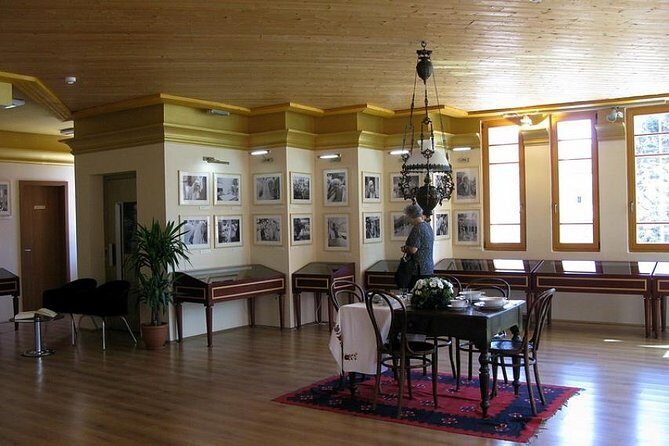
You’ll have a stop at the Mother Teresa Memorial House in her hometown Skopje. The key detail isn’t just that it’s free—it’s the location and the timeline it connects. The memorial house is on Macedonia Street in the Centar municipality, on the spot of the former Sacred Heart of Jesus Roman Catholic Church, where Mother Teresa was baptized.
Mother Teresa lived in Skopje from 1910 to 1928, so the memorial isn’t just a tribute—it’s tied to the years people say shaped her early life. The memorial has also drawn major early crowds; in the first three weeks after opening, it reportedly received 12,000 visitors.
In a day trip schedule, this stop can feel brief. Plan to use it as a reset moment: step inside if it’s open during your visit window, read what you can, and then take a couple of moments for photos without rushing.
If you prefer a slower pace, don’t over-plan this part. It’s better to stay present than to treat it as one more stamp in the passport.




Museum City of Skopje: the old railway station with a time machine feel
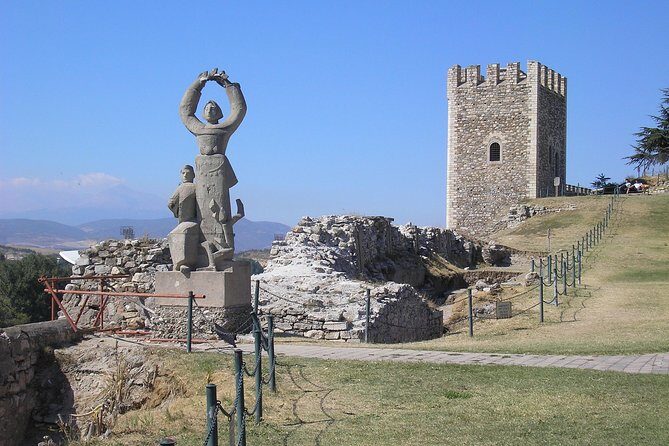
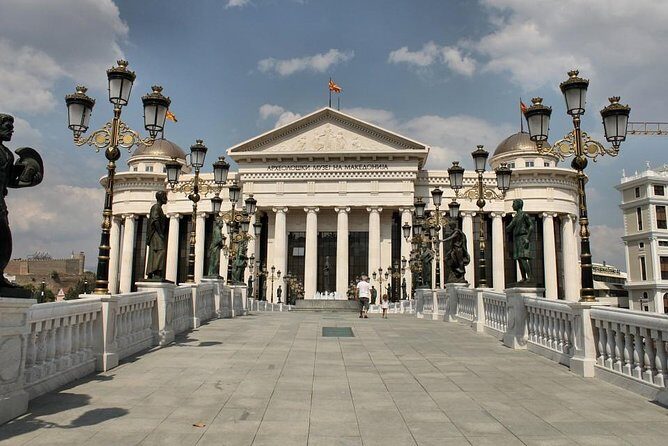
Next comes Museum City of Skopje, housed in what used to be the old railway station. This is one of those stops where the building itself carries the story. The station was partly destroyed in the 1963 earthquake, and the museum opened later (founded in 1949).
What you get here is a sweeping view of the city’s past. The museum’s permanent exhibitions cover history from around 3000 BC up to the present. That scope is useful on a one-day trip because it helps you connect the streets you’ve walked with the bigger historical forces that shaped the region.
Admission for this stop is listed as included, and the time on-site is typically short (about 30 minutes). That means you won’t see everything. Your best move is to focus on a few areas: pick the sections that match what you already saw outside—Ottoman-era market streets, the shift to modern civic spaces, and the earthquake-era rebuilding story.
One caution: on some days tied to local public observances, museums may not operate as expected. If the museum entry isn’t possible, you’ll still get the building exterior and general orientation, but the depth drops. So I’d treat Museum City as the “most important indoor” stop, even if you only have a short window.
Osvogo Mountains photo stops: the break that makes the day worth it
A big part of the value here is that you’re not trapped in Skopje’s center all day. The tour includes a scenic drive where you can photograph the Osvogo Mountains area.
In practice, the mountain portion can include a viewpoint stop that feels different from the city: fresh air, wide sky, and that satisfying reset after hours of streets and monuments. Reviews also mention a mountain-side stop with sunset views and a cathedral visible from the top area—exact details depend on timing and weather, but you can expect a similar “lookout” vibe.
This is where you can manage your energy. If your feet are tired, you can sit, breathe, and shoot photos without constant walking. If it’s cold (and especially if it’s rainy back in town), this countryside break can genuinely save your mood.
Pacing, walking pace, and how to avoid getting lost in the group
This is a group tour, so pacing is everything. The itinerary has multiple stops, and the walking portions can feel quick. In a cold or rainy day, it can also be harder to hear the guide if they’re speaking while moving.
My best advice for staying on track is simple: stay close to your guide during the walk segments. Some people naturally drift for photos in Old Bazaar lanes or at statue zones, but the schedule isn’t built for long solo detours.
If you want time for your own exploring, save it for when the day gives you breathing room. One review-style tip that’s easy to miss: there can be a bit of confusion about how to return to the meeting point area at the end, so double-check where the pickup van will be waiting.
Also pack for the weather. One practical thing I learned from real-world experiences on similar Balkan day trips: when it’s wet, you’ll wish you had a small umbrella and something warm for the quick stops outside.
Guides and storytelling: what the best version of the day feels like
The best days on this kind of cross-border trip are the ones with strong storytelling. Your Bulgarian driver often provides history context on the road—relationships between the region’s peoples, shared pasts, and the wars that still echo in public life.
Reviews mention drivers like Stefan, Philip, Georgi, and Ivan who were friendly, safe, and good at answering questions. That matters because the drive can otherwise feel like dead time. When the driver talks, even briefly, the border hours pass faster.
Then you get handed off to a local Skopje guide for the city portion. Names that came up include Vlado and Smile, both praised for their passion and ability to explain the current situation from the Macedonian side.
Here’s the balanced takeaway: you’ll probably get a mix of perspectives—sometimes aligned, sometimes not. That’s normal in this part of Europe. The value is that you’ll leave understanding not just what the monuments are, but why people care about them.
Price and value: is $106.93 a fair deal from Sofia?
At $106.93 per person for roughly 12 hours, you’re paying for three things at once: transport across borders, guided time in Skopje, and included admissions.
Look at what’s included versus free. Old Bazaar and the Skopje Eye Bridge area are free to enjoy. The Mother Teresa Memorial House is also free, and Museum City of Skopje includes admission. So you’re not just paying for a walk-and-photos day.
The biggest variable is the long drive. If you’re prone to motion sickness, or you hate border waits, you may feel like the cost is too high for the time you spend sitting. But if you’re okay with a full-day effort—and you want an easy way to see a different capital—this price starts to feel reasonable fast.
Small-group format also matters. A tour capped at 18 people usually means more manageable logistics and less lost time. I like that trade: you’re paying a bit more than a bare-bones bus idea, but you’re buying a smoother experience.
Who this Skopje day trip is best for
This tour is a strong match if you:
- Want a first taste of Skopje without booking multiple transport pieces yourself.
- Like cities where history shows up in streets and symbols, not just in museums.
- Prefer small-group structure over a big bus crowd.
- Can handle a long day and want to make it efficient.
It may feel less ideal if you:
- Want lots of relaxed café time and slow wandering.
- Need long indoor museum sessions rather than short guided stops.
- Are very sensitive to weather and cold (walking portions can be quick).
If you’re doing this from Sofia, it’s also a smart option when you don’t have days to spare. Skopje is not a one-hour stop. This tour gives you a working overview and a reason to come back later.
Should you book this Skopje trip from Sofia?
I’d book it if your goal is a structured, affordable snapshot of Skopje’s big stories: Old Bazaar street life, the symbolic monuments around Macedonia Square, Mother Teresa’s memorial site, and Museum City’s time-spanning exhibits—all wrapped into a single day.
I wouldn’t book it if you’re looking for a slow, flexible itinerary or if you hate long drives. In that case, you’d likely be happier staying longer and seeing Skopje at a gentler pace.
If you do book, bring cash for small purchases, arrive early to the start point, and keep your eyes on the group during walks. Do that, and you’ll come home with photos that actually match the meaning behind them—not just random statues and streets.
FAQ
How long is the Skopje day trip from Sofia?
It runs for about 12 hours, starting at 8:00am and ending back at the meeting point.
What’s the meeting point in Sofia?
The start point is Serdika Meeting Point – V Travel Day Tours Departures, Sofia Center, bul. Knyaginya Maria Luiza 2, 1000 Sofia, Bulgaria.
Is hotel pickup included?
The tour description notes convenient hotel pickup and drop-off options, and the tour also ends back at the meeting point.
What language is the tour offered in?
The tour is offered in English.
How many people are in the group?
The maximum group size is 18 travelers.
What sights are included in Skopje?
You’ll visit the Old Bazaar, Skopje Eye Bridge area, the Philip of Macedon warrior monument area, the Mothers of Macedonia fountain area, the Memorial House of Mother Teresa, and Museum City of Skopje.
Are any of the stops free?
Yes. Old Bazaar, Skopje Eye Bridge, and the Mother Teresa Memorial House have free admission.
Is Museum City of Skopje admission included?
Yes, admission to Museum City of Skopje is included.
What if the weather is bad?
This experience requires good weather. If it’s canceled due to poor weather, you’ll be offered a different date or a full refund.
How late can I cancel for a full refund?
You can cancel up to 24 hours in advance for a full refund.