REVIEW · PLOVDIV
Plovdiv Roman Sights Self-Guided
Book on Viator →Operated by VisitBulgariaOn Bespoke Experiences · Bookable on Viator
Roman Plovdiv, minus the tour stress. This self-guided experience uses an electronic guide plus audio directions and a live route so you can move at your pace through key Roman sights. You also get a flexible timeline, so you can breeze through or slow down when something grabs your attention.
What I like most is the personalized electronic guide that works on your device and handles the practical flow of the walk. I also appreciate having audio in English, Russian, and Bulgarian, so you’re not stuck with one language choice when you’re tired after a long day.
One thing to plan for: entrance fees for most stops are not included, so your final cost will depend on what you decide to enter (and how long you stay in each area).
In This Review
- Key things to know before you go
- A Self-Guided Roman Walk You Can Run on Your Own Schedule
- Price and What You Actually Get for $22.01
- Where You Start: The Ancient Stadium Area in Staria grad
- Stop 1: Plovdiv and Its European Capital of Culture 2019 Angle
- Stop 2: Ancient Theatre of Philippopolis in About 15 Minutes
- Stop 3: Ancient Stadium of Philippopolis and What’s Still Visible
- Stop 4: Plovdiv Old Town for the Roman-By-Foot Context
- How Long You Should Plan: 1 to 6 Hours, No Rush
- The Guide Experience: Maps, Audio, and a Real Human on Your Side
- Who This Is Best For (and Who Should Skip It)
- Should You Book Plovdiv Roman Sights Self-Guided?
- FAQ
- What languages is the audio guide available in?
- What’s included in the price besides the guide?
- Are entrance fees for the Roman sights included?
- Where does the tour start?
- How long should I plan for?
- Is this a private tour?
- FAQ
- Is free cancellation available?
- Do I need a ticket for the first stop?
Key things to know before you go
- Live map route helps you stay on track through central Plovdiv without reading a pile of instructions
- Audio in English, Russian, or Bulgarian keeps the story going while you walk
- Private experience means it’s only your group, not a shared scramble with strangers
- Roman sights in a tight loop: theatre, stadium, then Old Town
- Stadium reality check: parts of the ancient complex are under modern paving, and the guide helps you understand what you’re seeing
- Start any time within the day window (it runs 12:00 AM–11:30 PM), so your day stays yours
A Self-Guided Roman Walk You Can Run on Your Own Schedule
Plovdiv can feel like a city built in layers. This self-guided format is a nice match because the route focuses on Roman landmarks while letting you control the pace. There’s no group clock forcing you to “keep moving” when you actually want to stand and look.
The big win is the combo of an electronic personalized guide and an audio track. The guide is designed to cover both logistics and the on-site narration, which helps you spend your attention on the street scene instead of figuring out what comes next.
You also don’t have to worry about picking the “right” order. The flow takes you from the ancient stadium area into the theatre and then into Old Town, which creates a logical, walkable arc through central sights.
You can also read our reviews of more guided tours in Plovdiv

Price and What You Actually Get for $22.01
At $22.01 per person, you’re paying for the guidance package, not for a bundle of museum tickets. That’s an important value question, because it shapes how you should budget.
Here’s the practical math: Plovdiv’s stop is ticket-free, but the Ancient Theatre of Philippopolis and Ancient Stadium of Philippopolis list their entrance fees as not included. Old Town also isn’t covered by included admission.
So the cost is best viewed as: you’re buying a smooth, guided-on-your-phone walk plus audio storytelling. If you’re happy paying the small extra costs for specific entries you want to see, the guide itself is a strong deal for a Roman-sights day.
Where You Start: The Ancient Stadium Area in Staria grad
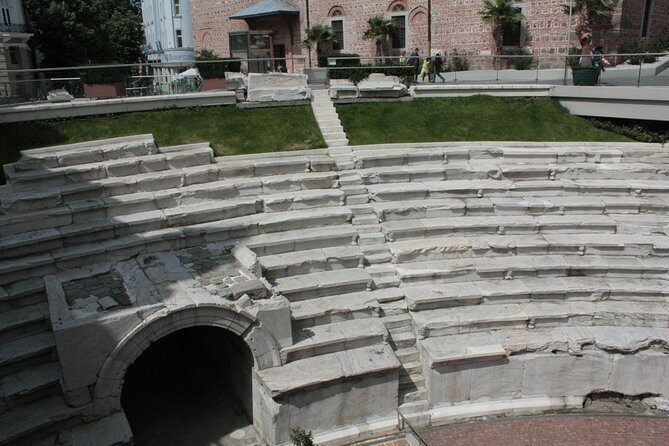
Your start point is by the Ancient Stadium of Philipopolis in Staria grad, in Plovdiv’s Center area (ul. Hristo G. Danov, 4000 Plovdiv). That’s a smart launching spot because the day’s “Roman spine” is already under your feet—then the rest of the story unfolds from there.
The tour is described as starting and then ending back at the meeting point. That matters because you’re not committing to a complicated out-and-back plan or trying to stitch together multiple neighborhoods by yourself.
Also, this is set up as a private tour/activity. Only your group participates, which tends to make self-guided days less chaotic. You’re not waiting on others, and you can pause for photos or reading without the awkward time pressure.
Stop 1: Plovdiv and Its European Capital of Culture 2019 Angle
You begin with Plovdiv’s European Capital of Culture for 2019 focus, with about 1 hour allotted and no admission ticket required. This is the welcome mat for your whole day, and it does a useful job: it helps you connect what you see to why Plovdiv is treated as more than a quick stop.
Why I like this start: it sets context before you move into the Roman sites. When you later stand near the Ancient Theatre and Stadium, you’re not just looking at ruins—you’re looking at pieces of a city that kept reusing and reshaping itself.
Because there’s no admission fee here, you can comfortably spend extra minutes if you spot something you want to read or photograph. Think of this hour as your setup time to get your bearings fast.
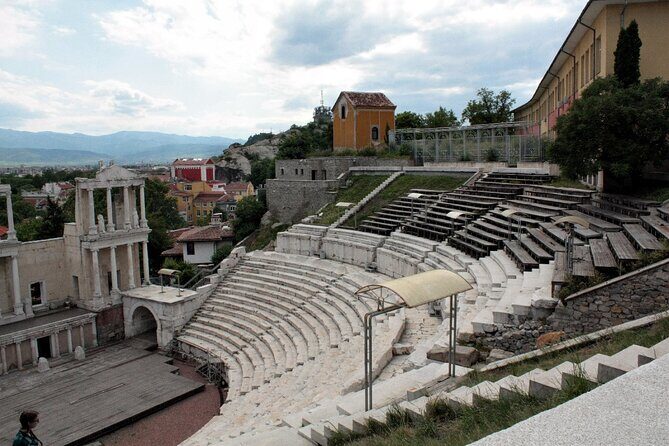
Stop 2: Ancient Theatre of Philippopolis in About 15 Minutes
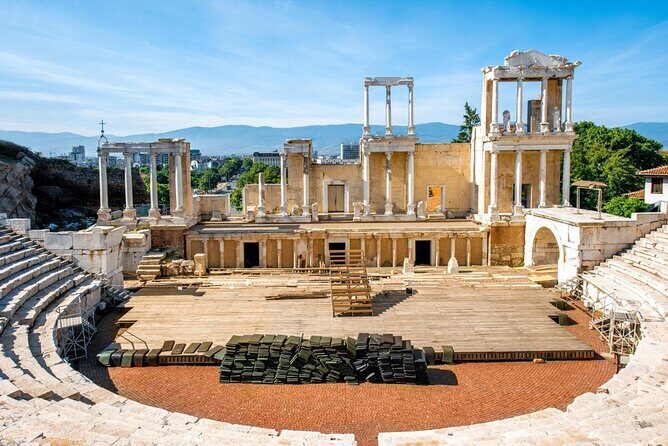
Next up is the Ancient Theatre of Philippopolis, a tight stop of about 15 minutes, with admission not included. In a short window, you need the story to be efficient—and that’s exactly where an audio guide helps.
A theatre like this isn’t only about “big stone.” The value is in understanding how performances and crowds would have worked in a Roman-era city. The guide format is built for this: you move where the sight lines and layout matter, and the audio can point out what to notice without you having to search for explanations on the spot.
If you want to make the 15 minutes work for you, don’t plan on doing everything at once. Decide what your priority is: views, architectural features, or the layout. Then let the audio drive the second and third things you notice.
Possible drawback: the stop is intentionally short. If you’re the type who reads every plaque and wants slow, long breaks, you’ll need to extend your time plan beyond the suggested 15 minutes.



Stop 3: Ancient Stadium of Philippopolis and What’s Still Visible
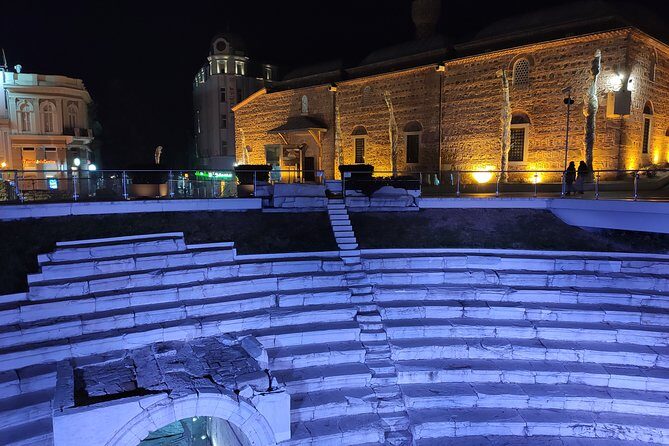
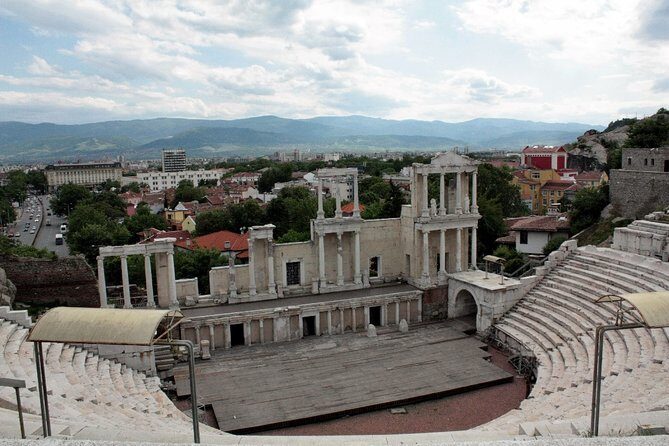
The Ancient Stadium of Philippopolis gets about 30 minutes. Again, admission isn’t included, and this stop is one of the most interesting because it’s not a neat “fully exposed” ruin.
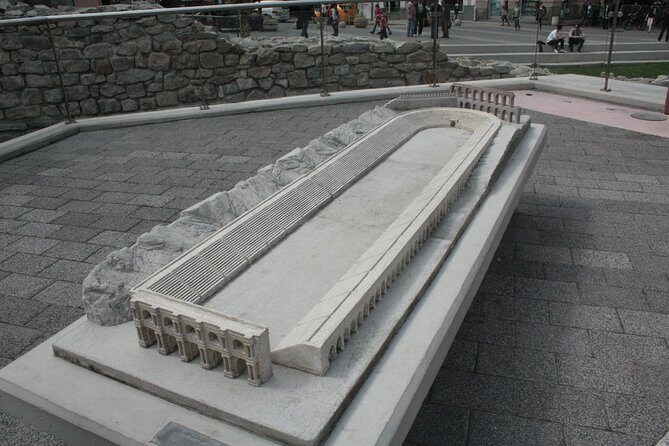
A key detail you should know going in: much of the ancient structure dates to the second century, but parts of it are unfortunately under the modern pedestrian street. What you can see today is only part of the original scale.
That’s where the guide’s storytelling matters. You may encounter a model that helps you picture what the stadium looked like when it was intact—especially its long form. One useful takeaway from the experience format is that it doesn’t let the mismatch between modern pavement and ancient length ruin your understanding.
Tip for your visit: as you walk, keep an eye out for where the ruins begin from street level and how you access the visible edges. The experience references access via a stairway at the beginning of the ruins, which is the kind of practical cue that saves time and avoids guesswork.
Stop 4: Plovdiv Old Town for the Roman-By-Foot Context
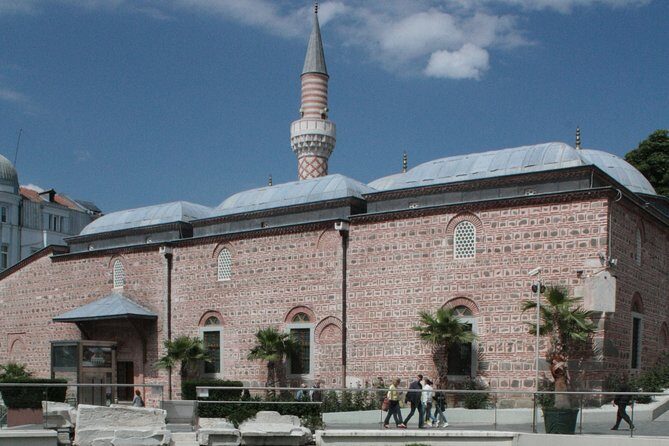
Your final Roman-sights-to-streets stop is Plovdiv Old Town, with about 1 hour and admission not included.
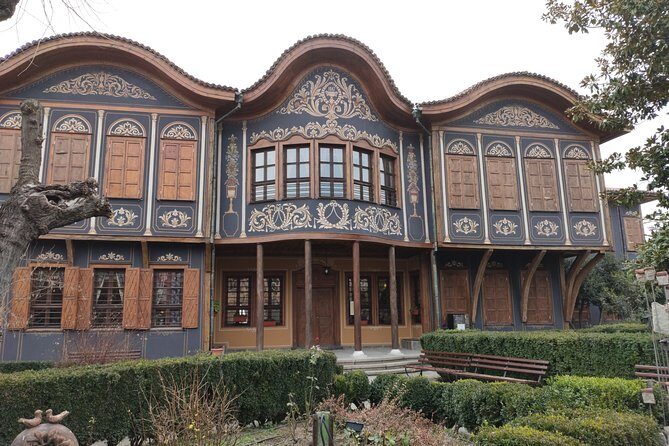
This part works best for me when you treat it as “texture time.” You’re not only collecting monuments; you’re absorbing how a place like Plovdiv keeps layers visible. Walking Old Town after the Roman sites gives you that sense of continuity—Roman foundations, later additions, and a city that refuses to be one era only.
Also, Old Town is where a self-guided format shines. If you get a sudden detour impulse—coffee break, a side street, a photo spot—the audio and route help you return to the main thread when you’re ready.
The only consideration: without paid entry sites here, your experience becomes more dependent on how you personally explore. If you like structured stops with clear boundaries, you might feel less “guided” during Old Town. If you like flexible wandering, it’s a great capstone.
How Long You Should Plan: 1 to 6 Hours, No Rush
The total duration is listed as about 1 to 6 hours. That range is a clue that this guide is meant to flex with you.
If you want a fast Roman hits-and-photos pass, stick close to the suggested timing: roughly 1 hour for the first context stop, 15 minutes at the theatre, 30 minutes at the stadium, and about an hour in Old Town. Then add buffer time to get situated at the starting area.
If you like to linger, you’ll be glad the format doesn’t pretend there’s only one correct pace. The guide and route are meant to keep you moving even when you slow down—so you can spend extra minutes at the ruins that capture your attention.
Practical pacing tip: build in a short break after the stadium. Walking in Roman areas often comes with uneven footing and lots of “look up, look down” moments. A 10-minute pause keeps your energy for Old Town.
The Guide Experience: Maps, Audio, and a Real Human on Your Side
This is not just a recorded audio file. You get an electronic personalized guide that you can load on every device, and it comes with live maps and route to follow. That combination makes it easier to navigate without constantly checking your surroundings against a printed map.
A small-but-meaningful detail: there’s support staff included (1 person especially for you). Even though the experience is self-guided, knowing there’s human support in the background changes how comfortable you’ll feel if you hit a confusing moment.
Audio language selection is also a quality-of-life feature. Choosing English, Russian, or Bulgarian means you can match the narration to your comfort level, which keeps the content flowing while you’re standing in a place where your eyes need to do the work.
The reviews-style themes you’ll feel in this product are straightforward: the content tends to be detailed, and the format is interactive in the sense that you’re actively walking the route rather than passively listening while parked.
Who This Is Best For (and Who Should Skip It)
This experience fits well if you want Roman sites in Plovdiv without the stress of coordinating timing with a group. It’s also a good match if you like to control your pace, because the walk is designed around a route you follow rather than a strict scripted tour.
It’s also smart for travelers who enjoy meaning, not just landmarks. A stadium covered by a modern street could be frustrating on its own, but with guided explanations and cues, it becomes a “now I get it” stop.
Who might not love it: if you want long stays, guided Q&A, or heavy museum-style time inside ticketed spaces, the self-guided format might feel too lightweight for your style. The stops are timeboxed, especially the theatre.
Still, you can adjust your pace in the real world. This is self-guided by design, so you can always spend more time where you want.
Should You Book Plovdiv Roman Sights Self-Guided?
I’d book this if you want an efficient Roman day in Plovdiv that stays flexible and doesn’t require you to become a navigation expert. For $22.01, you’re essentially buying a guided route plus audio storytelling, and you start with a ticket-free context stop, which lowers the risk.
I’d be slightly cautious if you’re sensitive to extra costs, because admission fees for the theatre and stadium are not included. If that’s a dealbreaker, price it into your planning before you commit.
If you like the idea of learning while walking, using a live map route, and finishing with Old Town on your own terms, this is a solid pick for a first or second visit to Plovdiv.
FAQ
What languages is the audio guide available in?
The audio guide is available in English, Russian, or Bulgarian.
What’s included in the price besides the guide?
The experience includes audio for the sights, an electronic personalized guide that you can load on your device, support staff (1 person especially for you), and access to the guided route and logistics.
Are entrance fees for the Roman sights included?
No. Entrance fees are listed as not included for the Ancient Theatre of Philippopolis, the Ancient Stadium of Philippopolis, and Plovdiv Old Town.
Where does the tour start?
It starts at the Ancient Stadium of Philipopolis in Staria grad Plovdiv Center, ul. Hristo G. Danov, 4000 Plovdiv, Bulgaria.
How long should I plan for?
Plan for about 1 to 6 hours, depending on how much time you spend at each stop.
Is this a private tour?
Yes. It’s private, and only your group will participate.
FAQ
Is free cancellation available?
Yes. You can cancel for a full refund up to 24 hours in advance of the experience start time.
Do I need a ticket for the first stop?
No. The first stop (Plovdiv, European Capital of Culture for 2019) lists admission ticket free.