REVIEW · PLOVDIV
Roman Plovdiv, Self-Guided Tour and Urban Quest Game
Book on Viator →Operated by Vutreshen Glas · Bookable on Viator
Roman Plovdiv turns streets into clues. In this self-guided quest, you follow the Roman-era story of Philippopolis with 16 riddles placed at key spots across the city center, while a web platform guides you through answers. It starts at the Roman Forum of Philippopolis in the Tsentar area and ends right back where you began.
I especially love the way the game makes you slow down and look. The puzzles are thoughtfully designed to push your eyes toward details you’d normally miss on a quick sightseeing loop, and the route feels built for discovery rather than box-checking. I also like the easy web platform for entering answers, with a hint option if you get stuck.
One consideration: it’s truly self-guided. You’ll need your own mobile device, so if your phone battery is low, plan ahead before you start.
In This Review
- Key things you’ll like about Roman Plovdiv
- Why this Roman quest feels different than most walking games
- Starting at the Roman Forum of Philippopolis (and walking the city center loop)
- What to expect at the beginning
- How the middle works
- Finishing back where you started
- The 16 riddles: how the challenge guides your attention
- What makes the riddles satisfying
- Using hints without ruining the fun
- Philippopolis in plain language: what you learn while you play
- When to go in Plovdiv: timing, pace, and night play
- Night can be great
- Price and value: $10.04 for 2 hours of city attention
- Practical logistics: what you need before you leave Central Square
- You need your own device
- No physical guide, so plan your start
- Location and transport
- Service animals and group setup
- Who this Roman Plovdiv quest suits best
- Should you book Roman Plovdiv: Self-Guided Tour and Urban Quest Game?
- FAQ
- How long does the Roman Plovdiv urban quest take?
- How far do you walk?
- Where does the tour start and end?
- What is included in the experience?
- Do I need my own phone?
- What languages is the game available in?
- How many riddles are there?
- Is it private or shared with other groups?
- What days and hours can I play?
- Can I cancel for a refund?
- Is the tour suitable for everyone physically?
Key things you’ll like about Roman Plovdiv
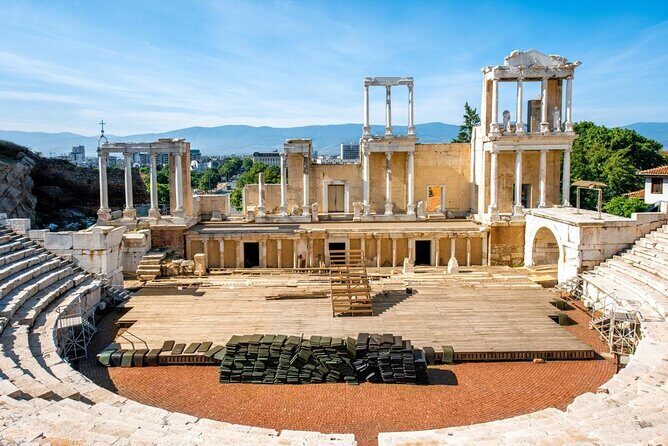
- 16 location-based riddles tied to Roman-era Plovdiv (Philippopolis)
- Web-based gameplay where you type answers and can request hints
- A walking route of about 2.5 km that’s usually finished in roughly 2 hours
- Built around the city center, so you’re not wandering far outside where the sights cluster
- Works for different times of day, and night play can feel especially fun
- It’s a private activity for your group, run at a pace you control
Why this Roman quest feels different than most walking games
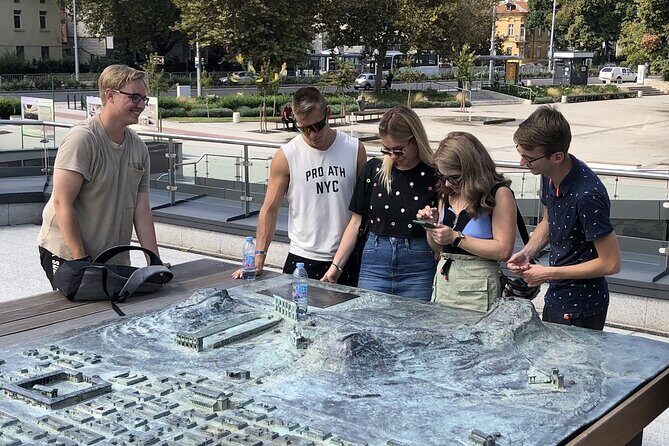
Most self-guided city games fall into two buckets: count something, then move on. This one has a more puzzle-like feel. The “escaperoom-style” riddles are made for looking, comparing, and spotting clues in your surroundings, then turning that into an answer through the website.
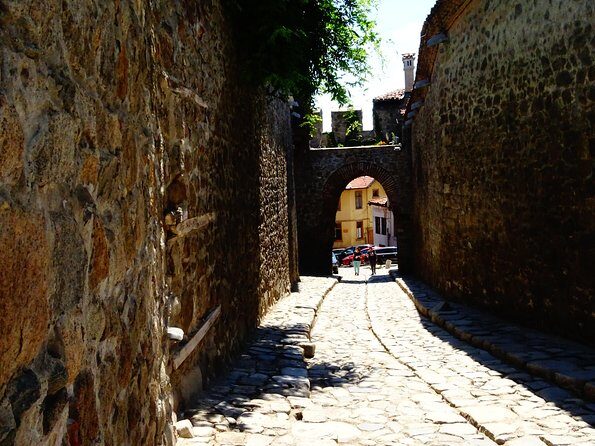
That approach matters because Plovdiv is the kind of city where Roman layers show up in small ways—shapes in stone, street patterns, and how certain buildings sit in the urban plan. If you only skim, you miss the story. This game nudges you to notice.
I also like that you’re not trapped with a rigid schedule. You start, play, and finish when you’re done. If you want a slower pace to read more in the streetscape, you can. If you’re moving quickly and solving efficiently, you’ll get through faster.
You can also read our reviews of more guided tours in Plovdiv

Starting at the Roman Forum of Philippopolis (and walking the city center loop)
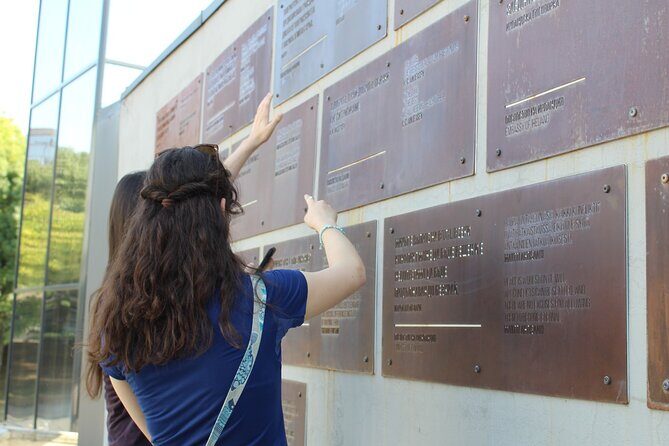
Your adventure kicks off at the Roman Forum of Philippopolis, in the Tsentar Plovdiv Center area, Central Sq 1, 4000 Plovdiv, Bulgaria. From there, the quest leads you through significant Roman-linked locations scattered around the center.
You’re covering about 2.5 km total, with an average completion time around 2 hours (based on the pace of solving 16 riddles). That’s a sweet spot: long enough to feel like you explored, short enough that it doesn’t swallow your whole day.
What to expect at the beginning
At the start, you’re positioned for context. The Roman Forum is one of those places that makes it easier to imagine the Roman city layout. Even before you solve the first riddle, you’ll get the sense that you’re walking through a place with deep continuity: old streets, reused foundations, and layers stacked across centuries.
How the middle works
The game then “hands off” from one riddle spot to the next. Each stop is designed to make you look around rather than just glance forward. You’ll be reading the clue, scanning the immediate area for visual markers, then entering your answer in the web platform.
Because the riddles sit at important points in the city center, you’re also moving through the parts of Plovdiv most visitors naturally gravitate toward. That means you can treat the quest as your sightseeing backbone. You’re not just walking; you’re building a mini-lecture out of your route.
Finishing back where you started
The activity ends back at the meeting point. That’s handy. You don’t have to figure out a second “where do we end” plan or hunt for transport afterward. You’ll also naturally end at a central spot, which makes it easy to continue your day—coffee, dinner, or more exploring.




The 16 riddles: how the challenge guides your attention
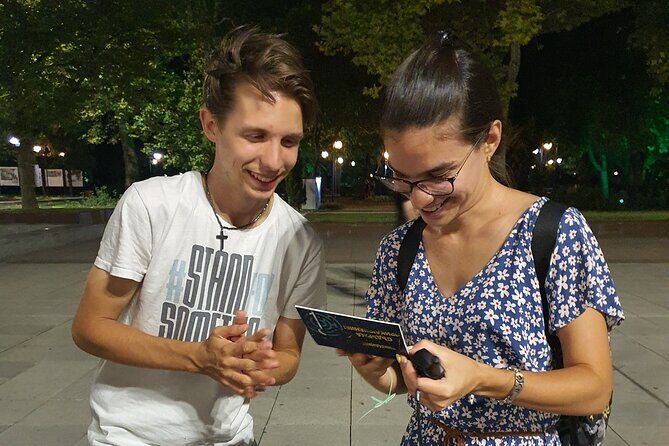
The standout feature here is the structure: 16 challenging riddles, each tied to a significant location. The game isn’t asking you to guess randomly. It’s steering you to specific things to notice, then rewarding you when you connect the clue to what you see nearby.
What makes the riddles satisfying
The best part—based on the strongest feedback—is that the puzzles aren’t generic. They aren’t the typical pattern of “count this, count that.” Instead, they encourage you to hunt for small details and think through the meaning.
That matters for Plovdiv because the Roman-era story isn’t always obvious at a glance. If you’ve ever walked past an old wall and wondered what you’re supposed to notice, you’ll appreciate this design. It gives you a reason to look closer.
Using hints without ruining the fun
The website supports hints. There’s also a trade-off: hints can affect your end score. That design keeps the experience from becoming a fully passive “get the answer instantly” exercise. If you use hints, you still stay in the puzzle flow, but you’re nudged to try on your own first.
If you’re traveling with someone who reads clues differently than you do, this can work well. One person can focus on scanning details while the other handles the clue interpretation. Or you can take turns entering answers. The web interface makes that simple.
Philippopolis in plain language: what you learn while you play
The quest centers on Plovdiv’s Roman era, when the city was known as Philippopolis. That alone is a strong hook, because Plovdiv isn’t usually just a one-era city. It’s a layered one, and Roman remains and Roman city life show up across the center.
What the game does well is translate that background into something you can experience on foot. Instead of memorizing dates, you’re connecting clues to real places. As you solve each riddle, you uncover information about the location you’re standing at and what it meant in Roman Plovdiv.
I like that this turns “history sightseeing” into an activity with momentum. You move from one point to the next with a purpose, then learn in small pieces. It’s less like sitting through a lecture and more like assembling a story from the street-level evidence.
And if you’re even partly familiar with Roman history, you’ll still likely pick up new angles. Several people note that the game works for locals too, which usually means it doesn’t just repeat the obvious talking points.
When to go in Plovdiv: timing, pace, and night play
The activity is available Monday through Friday from 9:00 AM to 10:00 PM. That long window is a big deal for planning. You can schedule it around museum hours, meals, and whatever else you want to do that day.
It’s also flexible in pacing. With a route of about 2.5 km, you’re walking at a moderate effort level. The quest expects moderate physical fitness, so it’s not a marathon, but it isn’t a total sit-and-stroll either.
Night can be great
One strong detail from feedback: night play can feel very nice. That’s worth taking seriously if you’re a fan of atmospheric city walking. In the evening, the clues and street visuals can stand out more, and the walk itself can feel more like an adventure than a daytime errand.
Just remember: at night you’ll want better visibility on the phone screen and in the streets around each riddle point. If your eyesight isn’t great in low light, bring your own torch-style light or plan for earlier timing.
Price and value: $10.04 for 2 hours of city attention

At $10.04 per person (with group discounts), this sits in the “cheap enough to try” category for what you get. You’re paying for a structured, self-guided route plus the puzzle content—16 riddles, delivered through a custom web experience.
Here’s why that can feel like good value:
- You get time pressure in the best way. A quest makes you move and solve, not just wander.
- You’re buying access to information that’s attached to real locations, not just generic background text.
- The web platform handles the mechanics of answer entry and hints, so you’re not juggling paper clues.
If you’re comparing it to hiring a guide, this is far less expensive. If you’re comparing it to free apps that mostly give you pins on a map, you’re getting a real “activity” instead of only directions. That difference is where the value usually shows.
Group discounts can also help if you’re traveling with friends. And since it’s private for your group, you won’t be squeezed into a shared group dynamic.
Practical logistics: what you need before you leave Central Square
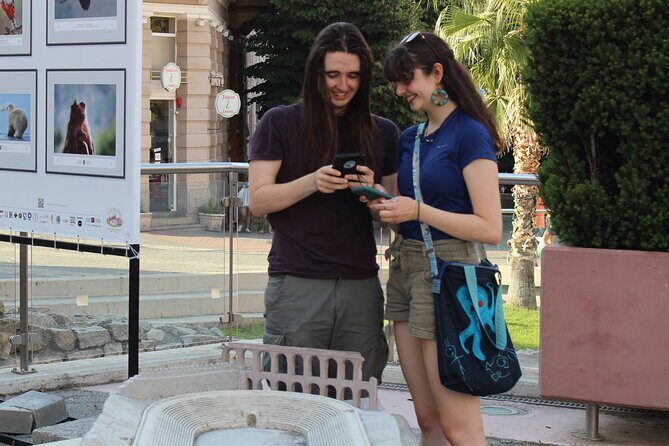
This is designed to be easy to start, but you should set yourself up for success.
You need your own device
The tour does not provide a mobile device. You’ll use your own phone to access the web platform, enter answers, and use hints if needed. If you’re the type who saves battery by turning off screen brightness or using power-saving mode, be cautious. The game works through that screen.
No physical guide, so plan your start
There’s no on-site guide. The advantage is flexibility. The drawback is responsibility: you need to find your starting point and keep track of your route by yourself. Luckily, it starts and ends at the same place, which reduces the “lost at the end” stress.
Location and transport
The meeting point is near public transportation. That’s useful for fitting the quest into a day with other plans, especially if you’re not staying right in the center.
Service animals and group setup
Service animals are allowed, and the activity is private for your group. That means you can treat it as a shared team experience without strangers mixing into your puzzle-solving rhythm.
Who this Roman Plovdiv quest suits best
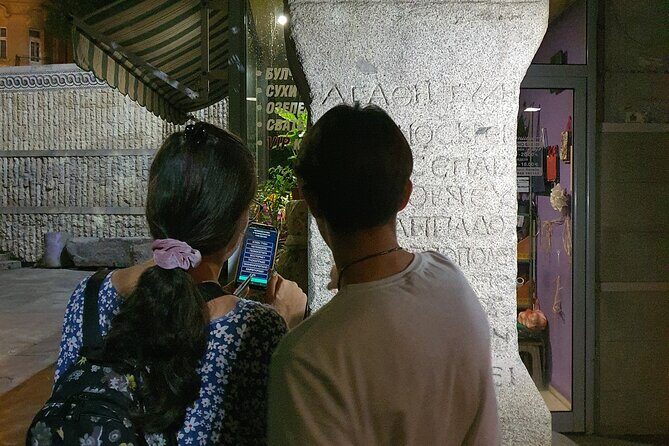
This is a smart pick if you like city walking but hate the passive vibe of “just look at the buildings.” It’s also great if you want Roman context but don’t want to read dense plaques for an hour straight.
You’ll probably enjoy it if you’re:
- visiting Plovdiv for a short time and want a strong “center loop”
- the type who likes puzzles, scavenger-style challenges, or clue hunts
- traveling with a partner or friends and want a shared activity that still feels like sightseeing
- comfortable walking for about 2 hours and a couple of kilometers
It may be less ideal if you:
- hate relying on your phone for anything
- want someone to talk to you the whole time (this is self-guided)
- are expecting a fully wheelchair-style, low-walking experience (it calls for moderate fitness)
Should you book Roman Plovdiv: Self-Guided Tour and Urban Quest Game?
I’d book it if you want an efficient, fun way to experience Plovdiv’s Roman-era footprint without paying for a full guided tour. The strongest reason is the puzzle design: the riddles encourage real attention to the street details and the information feels tied to what you’re seeing, not bolted on later.
Do it if you’re traveling in a group and want something that works even when people have different sightseeing styles. One person can focus on the clues, another can scan the area. Then you swap roles and keep going.
I’d skip it only if you’re trying to avoid phone use, or if puzzles just aren’t your thing. Since it’s self-guided, you’ll feel every bit of that choice.
FAQ
How long does the Roman Plovdiv urban quest take?
It takes about 2 hours, with an approximate duration listed as 2 hours 30 minutes.
How far do you walk?
The route covers about 2.5 km.
Where does the tour start and end?
It starts at the Roman Forum of Philippopolis at Tsentar Plovdiv Center, Central Sq 1, 4000 Plovdiv, Bulgaria, and ends back at the same meeting point.
What is included in the experience?
You get access to a web-based game platform, custom escaperoom-style riddles for each location, and information on the sights you visit.
Do I need my own phone?
Yes. A mobile device is not provided, so you’ll use your own mobile phone.
What languages is the game available in?
The experience is offered in English and Bulgarian.
How many riddles are there?
There are 16 riddles, each located at a significant spot around the city center.
Is it private or shared with other groups?
It is private, and only your group participates.
What days and hours can I play?
It runs Monday through Friday from 9:00 AM to 10:00 PM.
Can I cancel for a refund?
Free cancellation is available up to 24 hours in advance for a full refund.
Is the tour suitable for everyone physically?
It’s recommended for travelers with moderate physical fitness.