REVIEW · SOFIA
Sofia Food & Tasting Tour with Communist-Era Tram Ride
Book on Viator →Operated by Peter's Tours · Bookable on Viator
Food clues the whole story of Sofia. In about three hours, you’ll do a tight loop of landmarks and Bulgarian beer and wine tastings, with a communist-era tram ride to keep things moving. This is one of the easier ways to get oriented fast without eating only in tourist places.
I also like how Peter’s format keeps the sights short and the food time useful. You get guided context for major Sofia buildings (Orthodox, Roman-era, Jewish, Ottoman), and the pacing is designed so you’re not stuck standing around. One drawback to consider: because the stops are brief and the tour is time-boxed, you won’t have time to go deep inside every attraction you pass.
In This Review
- Highlights you’ll actually feel
- Price and Time: What $91 Buys You in Sofia
- Where the Tour Starts at Alexander Nevsky (and How Peter Keeps It Moving)
- Cathedral, National Library, and the Buildings That Tell Bulgaria’s Story
- Sofia University and the Eagles’ Bridge Stretch
- Zhenski Pazar Market: The Area of Tolerance You Can Taste
- West Gate and Ancient Serdica: Roman Sofia in Small Footsteps
- Synagogue, Central Mineral Baths, and the Mollah Effendi Mosque
- Five Food Stops: Bulgarian Plates, Beer, Wine, and Snacks
- Communism-Era Tram Ride: A Smart Break in the Middle
- Tips to Get the Most Out of This Short, Full Day
- Should You Book This Sofia Food and Tasting Tour?
Highlights you’ll actually feel
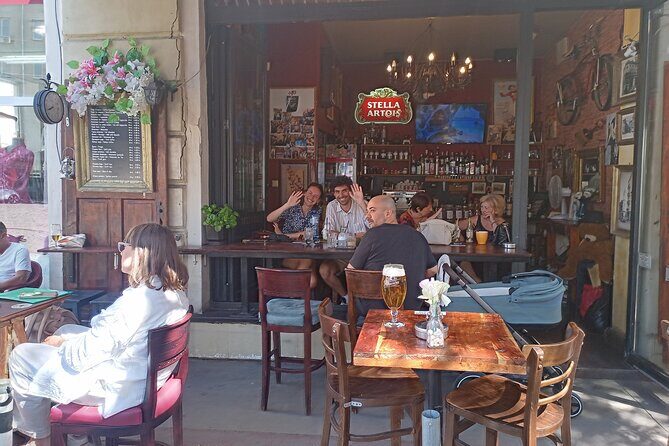
- Five food stops with beer and a glass of local wine, plus snacks and traditional meals
- Short, focused sightseeing stops tied directly to what you’re eating and drinking
- Communist-era tram ride as a practical break when walking gets hot or slow
- Small group size (max 11) for a smoother pace and easier questions
- A route that hits Orthodox, Roman, Jewish, and Ottoman Sofia in one day
Price and Time: What $91 Buys You in Sofia
At $91.07 per person for about three hours, this tour is priced like a “high-value sampler,” not an all-day food crawl. That matters because you’re getting more than snacks: you’re paying for guided timing, food sequencing (so you’re not stuffed too early), and a route that links major Sofia landmarks to daily life and culture.
There’s also some smart value baked in:
- Alcohol is included (Bulgarian beer and a glass of local quality wine)
- Breakfast is included, which is great if you treat the tour like your main meal plan
- You get traditional meals and salad, plus appetizers and dessert
- A city card for the day is included, so you’re not only buying a walk-and-taste
If you’re the type who wants a quick “start here” experience before branching out on your own, this format can be a good deal. Just remember: it’s still a short window, so you’ll move between areas and see plenty, but you won’t do long museum-style visits.
You can also read our reviews of more food & drink experiences in Sofia


Where the Tour Starts at Alexander Nevsky (and How Peter Keeps It Moving)
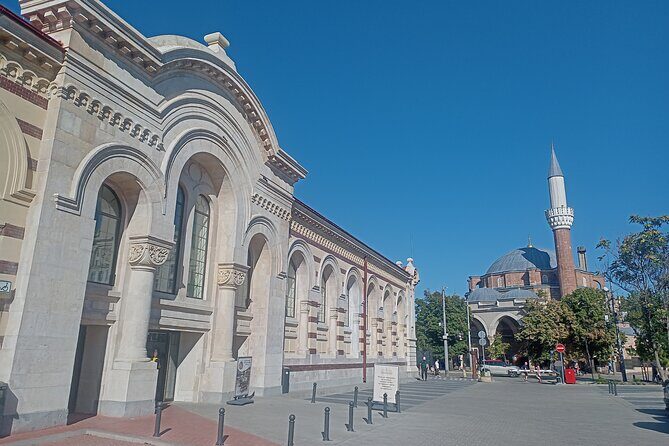
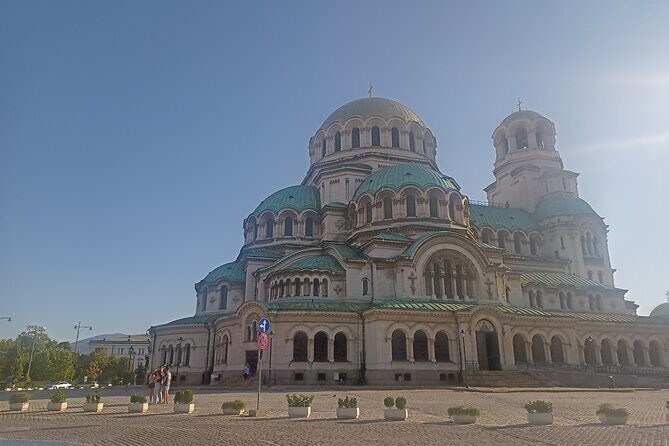
You begin near the Patriarchal Cathedral St. Alexander Nevsky in Sofia Center (Sveti Aleksandar Nevski square). This is a smart starting point because the cathedral is one of the city’s defining landmarks, and it gives you an immediate mental map for where Sofia’s big sights cluster.
From there, Peter runs the tour with a clear structure: short walks, quick explanations, then food. In reviews, people consistently highlight how organized he is and how smoothly everything runs without rushing you through tastings. In practice, that means you can ask questions, hear the story behind what you’re seeing, and still have time to enjoy the meals.
You’ll also travel from stop to stop as part of the plan. That’s a big deal in a city where distances can add up fast. The tour includes travel time, so you’re not constantly checking buses or wondering how to reach the next tasting.
Cathedral, National Library, and the Buildings That Tell Bulgaria’s Story
Sofia starts big. The first major stop is St. Alexander Nevski Cathedral, built in a Neo-Byzantine style and known as one of the largest Eastern Orthodox cathedrals in the world. Even if you’re not a church-details person, the scale is the point. You get the feeling that Sofia wants to be understood in symbols, not just streets.
Next, you move through the area’s “brain and power” buildings. The St. Cyril and St. Methodius National Library is massive on paper and on purpose: it holds millions of documents and includes rare, valuable collections from the 15th–21st centuries. The practical value here is timing. You’re not sitting through a long visit; you’re seeing why Sofia values learning and preservation so much that it built a flagship library.
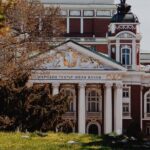
You’ll also hear architectural connections around the National Assembly area, including a Neoclassical building tied to Viennese architect Friedrich Schwanberg (1881–1883), and the National Assembly building itself, built 1884–1886 by Constantin Yovanovic. The takeaway isn’t just dates. It’s how the city uses architecture to project legitimacy—first in religion, then in culture and government.
Sofia University and the Eagles’ Bridge Stretch
A key moment in the route is the stop at Sofia University St. Kliment Ohridski. The university was founded on 1 October 1888, and the tour focuses on its central hall—especially the stained glass windows you can see on weekdays.
The useful part of stopping here is the way Peter links “education” to “identity.” Sofia’s story isn’t only old ruins and famous churches. It’s also modern institutions that grew out of earlier cultural movements. The route positioning matters too: the university and the National Library are near Eagles’ Bridge, so you get a sense of how the city’s civic life is stitched together by geography.
If you’re visiting in warmer weather, this part also helps psychologically. You’re transitioning from major landmark clusters into a more local-feeling market area next.
Zhenski Pazar Market: The Area of Tolerance You Can Taste
The tour’s food energy ramps up at Zhenski Pazar Market, established more than 140 years ago. The scale is eye-opening: around 60,000 visits per day.
What makes this stop unusually interesting is the setting: Zhenski Pazar is in the so-called Area of Tolerance in Sofia. The name comes from the close proximity of religious communities. As you look around, you’re near a church (Saints Cyril and Methodius), the Banya bashi Mosque, and the Central Synagogue of Sofia.
That matters for your visit because it reframes the food part. You’re not eating in a random market. You’re eating in a place where multiple communities have coexisted close enough that the city had to build a neighborhood identity around it. It’s social history you can literally walk through.
A few more Sofia tours and experiences worth a look

West Gate and Ancient Serdica: Roman Sofia in Small Footsteps
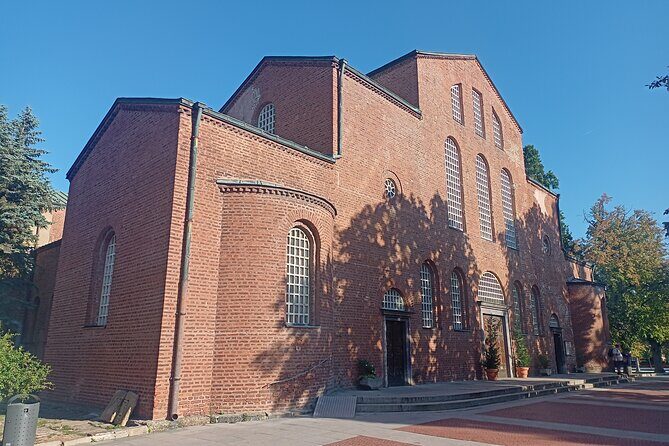
Next you get Sofia’s older layer: the West Gate of Sofia, part of the ancient fortification system of Serdica. You’ll hear the wall was erected in the second half of the 2nd century AD, with a recorded width of 2.20 meters. Later, at the end of the 3rd or beginning of the 4th century AD, remodeling happened and a ditch was dug—about 14 meters west, roughly 2 meters deep and 5 meters wide—used in the 4th century.
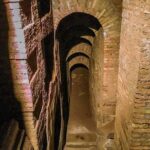
Then comes Ancient Serdica Archaeological Complex. The stop is designed for quick understanding: two zones, including the Largo area underneath Nezavisimost Square, where unearthed remains connect to cultural events. You can see the line of the Roman town’s main street, the decumanus maximus, which connected the eastern and western gates.
This section is valuable because it avoids “ruin fatigue.” You don’t get lost in a huge archaeological site. You get key elements that explain how Roman city planning still shapes where people moved and lived. Even if you only have a short time in Sofia, it gives you context for why modern streets feel the way they do.
Synagogue, Central Mineral Baths, and the Mollah Effendi Mosque
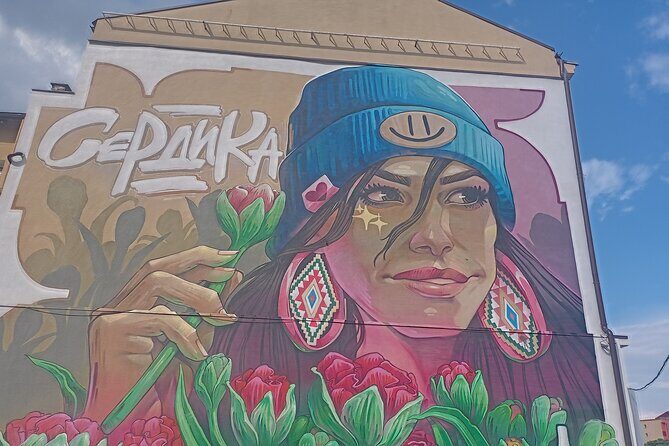
Sofia’s religious layers don’t stay in neat categories on this tour. You shift from Jewish heritage to Ottoman-era architecture and then to thermal culture.
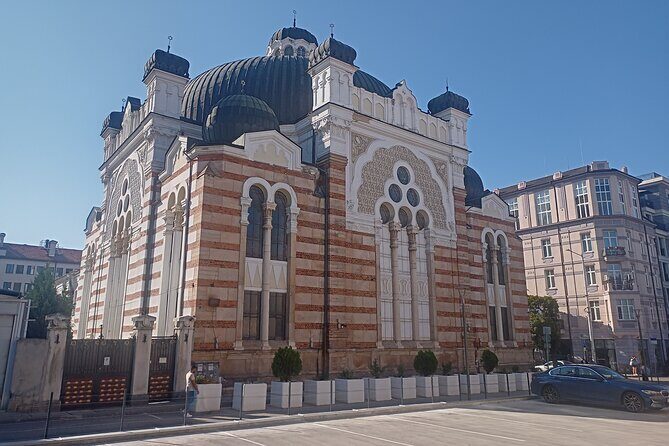
The Central Sofia Synagogue is a major stop. It’s described as a point of pride for the Bulgarian Jewish community. It’s one of Europe’s three largest Sephardic (Spanish-Jewish) synagogues and the largest on the Balkan Peninsula.
Then you head toward Sofia’s famous hot-water history: the Natural Hot Springs, where water reaches 46°C. The Central Mineral Baths building is designed in Vienna Secession style while blending Bulgarian, Byzantine, and Eastern Orthodox decorative elements. Architects include Petko Momchilov and Friedrich Grünanger, with the project dating to 1904–1905 and approval on 30 January 1906.
You also hear about the Mollah Effendi Mosque, supported financially by Mullah Effendi Kada Seyfullah. It’s tied to architect Mimar Sinan and is associated with dates expressed as 974 in the Hijri calendar, or 1566–1567 AD.
The practical benefit here is that these aren’t random “pretty buildings.” They’re part of Sofia’s living identity. When you connect them back to the market stop, you get a clearer picture of how multiple cultural threads shaped the city’s daily rhythm.
Five Food Stops: Bulgarian Plates, Beer, Wine, and Snacks
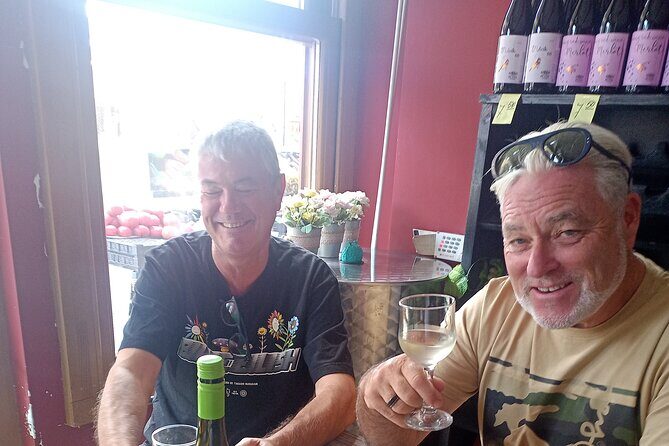
Food is the core reason most people book this tour, and the structure is designed to keep you happily full rather than just “stuffed.” You’ll have:
- Traditional starters, including Bulgarian sausages and cheese, plus wine or beer
- Traditional meals and salad
- Snacks and dessert
This is also where the tour earns its reputation for being fun. In reviews, people mention the guide bringing them to spots that are harder to find alone, and that the tastings come in a sensible order. You won’t just walk past restaurants—you’re led to places that fit the story of what you’re seeing.
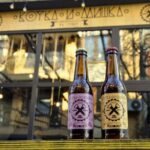
If you drink alcohol, you’ll appreciate that the tour includes Bulgarian beer and a glass of local quality wine. If you’re not drinking, the tour still builds around food and the included tastings, but the alcohol piece is clearly part of the plan. Also note the guidance: alcohol isn’t suitable for children 17 and under.
And yes, eat like you mean it. One strong tip from the experience: skip hotel breakfast so you can actually taste everything without cutting portions early.
Communism-Era Tram Ride: A Smart Break in the Middle
The tour’s title includes a communist-era tram ride, and that’s more than a theme. It’s a real-world benefit. When the day gets hot or you’ve covered enough pavement, that ride gives your legs a rest and keeps you on schedule.
Reviews also mention that Peter uses the tram strategically when conditions are tough. That’s the kind of practical local planning that makes a “short tour” feel comfortable instead of rushed.
If you’re the type who wants Sofia at a human pace—half on foot, half supported by transit—that tram segment fits perfectly. It also reinforces the tour’s broader idea: Sofia isn’t one era. It’s old monuments, everyday markets, and newer layers shaped by the 20th century.
Tips to Get the Most Out of This Short, Full Day
Here’s what will help you enjoy the tour more, with less stress:
- Wear comfortable walking shoes. Stops are short, but the route still adds up.
- If you can, plan your day so this tour is your starter plan. It sets your bearings for the rest of Sofia.
- Tell Peter about dietary restrictions at booking. The tour notes it can accommodate vegetarian, vegan, and gluten-free needs.
- If you have questions about what to do later, ask. Reviews mention Peter doesn’t just talk at you—he gives practical recommendations beyond the tour’s main stops.
One last note: the maximum group size is 11 travelers. That small size is one reason the pace stays manageable and why it feels personal instead of factory-like.
Should You Book This Sofia Food and Tasting Tour?
If you want a fast, high-impact introduction to Sofia’s food scene, this tour is a strong choice. The mix of five tastings, included beer and wine, and guided stops across multiple eras makes it a good “first day” activity. You’ll come away with both a fuller stomach and a better sense of how Sofia connects religion, governance, and daily life.
I’d skip it only if you hate walking, dislike short stops, or want long, independent museum time. At around three hours, it’s built for sampling and orientation, not for deep exploration of any single site.
If you’re excited by the idea of eating your way through neighborhoods—while hearing why the buildings matter—book it and treat it like your Sofia warm-up.